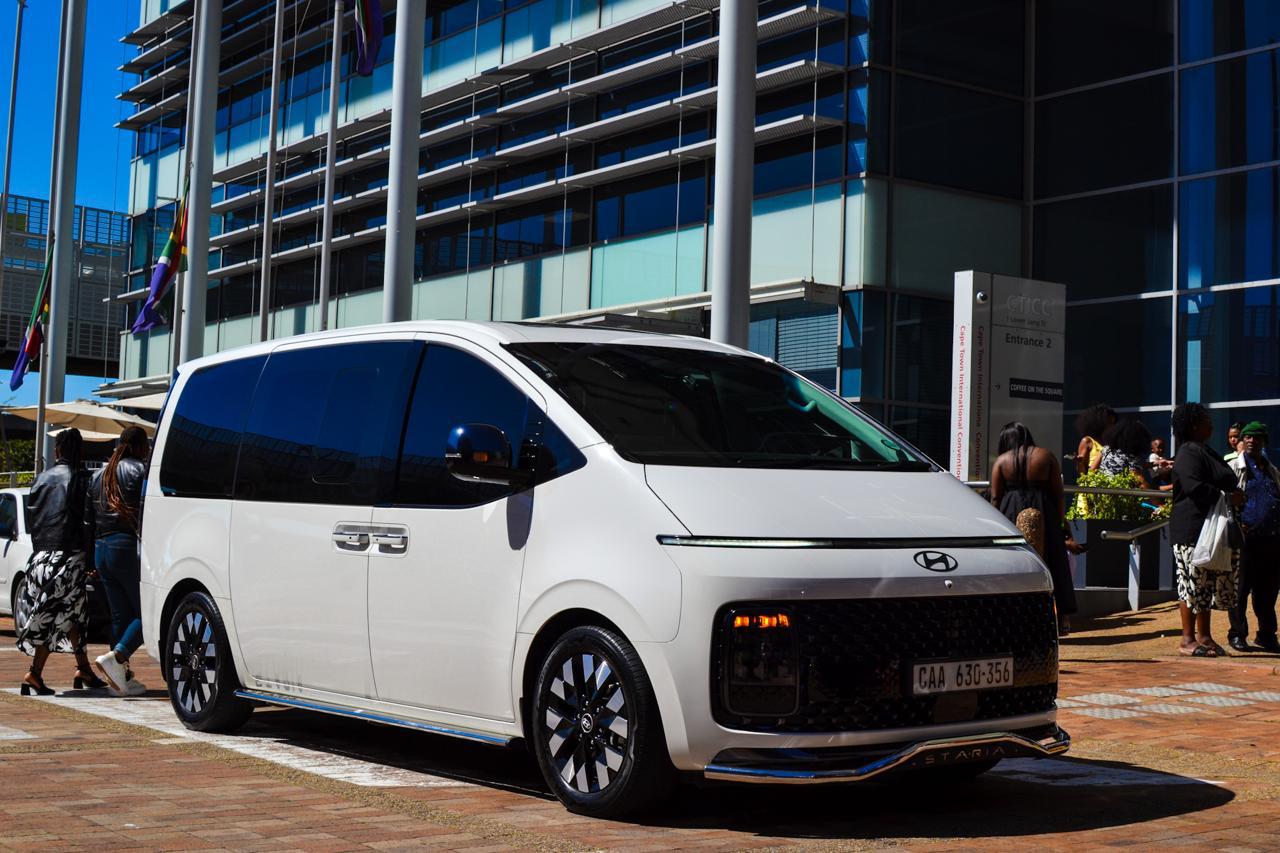
A chamber hosting a business delegation in Cape Town for one day has a single appointment that cannot move, and the whole transport plan is built backwards from it. With eighteen visitors, two staff and a signing ceremony at 16:00, that means three vehicles on a full-day booking, a slack stop placed directly before the ceremony, and the signatories in a vehicle that can leave ahead of the rest.
The day succeeds if two things are true at 16:00. The agreement is signed in front of everyone who should witness it, and the eighteen visitors have each met the local businesses they came to meet. A chamber with two staff cannot also be directing traffic.
Two staff, eighteen guests, and who does what
Take a bilateral chamber with a director and one coordinator. Eighteen business owners are visiting for a day of introductions that ends with the signing of a cooperation agreement.
Twenty people travel. Two Hyundai Staria Luxury seat eight passengers each and one Hyundai Palisade Elite seats six, so the booking has 22 seats. The split:
- Palisade: the director, the leader of the visiting delegation and the two other signatories. Four people, two seats spare.
- Staria one: eight visitors.
- Staria two: seven visitors and the coordinator, who holds the list and the phone.
That arrangement puts a staff member in the lead vehicle and one in the last. The director hosts. The coordinator is the one voice for changes on the day and speaks to the concierge, who speaks to all three drivers. Neither of them is counting heads on a pavement, because the run sheet gives each driver the number of people who belong in the vehicle.
A day plan for hosting a business delegation in Cape Town
Business process outsourcing is one of the province's strongest sectors, with about 60% of the national market, and much of it sits in office parks such as Century City. A visiting group of business owners will often ask to see an operation of that kind, so the illustration includes one.
| Time | Stop | Purpose |
|---|---|---|
| 08:15 | Hotel, city centre | Three vehicles load |
| 08:45 to 10:00 | Breakfast briefing, city centre | The chamber introduces the day |
| 10:30 to 12:15 | Company visit, Century City | About 12 km, 15 to 20 minutes |
| 12:45 to 14:00 | Networking lunch, V&A Waterfront | Local members join |
| 14:15 to 15:00 | Harbour-side walk and showroom visit, Waterfront | The slack stop |
| 15:10 | Depart for the ceremony venue | A few minutes' drive |
| 15:20 | Arrive, hotel in the city centre | Forty minutes in hand |
| 16:00 to 16:45 | Signing ceremony | Fixed |
| 16:45 to 17:45 | Reception | |
| 18:00 | Visitors' hotel | |
| 18:15 | Vehicles released | Ten hours from 08:15 |
Ten hours of ten. About 35 km of 250 for each vehicle. This day is short on distance and tight on time, as most city programmes are.
Why the buffer sits at 14:15
Every stop before the ceremony can overrun, and with eighteen entrepreneurs meeting potential partners, at least one will. The usual mistake is to spread five minutes of slack after each stop. Five minutes absorbs nothing. A lift queue uses it.
The better method is one stop that can be shortened or dropped without loss, placed immediately before the fixed appointment. Here it is 45 minutes at the Waterfront after lunch. If the Century City visit runs 25 minutes long and lunch another 15, the walk shrinks to five minutes and the convoy still leaves at 15:10. If the morning runs to time, the visitors get a pleasant three quarters of an hour and the ceremony starts with nobody out of breath.
Then there are forty minutes at the venue itself. Twenty people leaving three vehicles, crossing a lobby, finding a function room and being seated in the right order takes fifteen. Signatories want ten minutes to read the final text. A photographer wants five. Forty minutes is not generous.
The signatories' vehicle
Suppose lunch has gone very well and at 14:50 half the delegation is still exchanging cards. The coordinator makes one call.
The Palisade leaves at 15:00 with the four signatories. They are at the ceremony venue by 15:10, in the room by 15:20, with the documents. The two Starias follow at 15:20 with everyone else and arrive at 15:30. The ceremony starts at 16:00 as printed on the invitations.
This is what a separate vehicle for the principals is for. In a single coach, the four people the ceremony cannot start without are held at the lunch venue by the fourteen it can.
Compare the arrangement many small chambers use: members' own cars and a few e-hailing rides. Twenty people in five or six cars arrive over a spread of fifteen minutes at each of five stops. That is more than an hour of the day spent waiting for the last car. Somebody's car is in a parkade on level four. The director is driving, so the leader of the delegation is being hosted by the back of a head. And at 15:40 one car with a signatory in it is looking for the hotel's entrance on a one-way street.
Notes for a small office
The work falls on the coordinator, so it helps to know what can be handed over.
The brief. One table, one line per stop, with the door and a contact number for each. The delegation run sheet has the columns. It goes to the concierge a week ahead and is closed the day before.
The venues' kerbs. Ask each venue where three vehicles may stop for three minutes. Hotels and office parks usually have an answer. A restaurant on a busy quay may not, and the drop-off may be a short walk away. Better to know.
The evening before. The coordinator receives each driver's name, photo and direct number, and forwards the Palisade driver's details to the director.
The invoice. The three vehicles are on one quote and one invoice. A chamber that hosts several delegations a year can ask about monthly invoicing on account. The corporate chauffeur account explains how that works.
Wesgro, the official trade and investment promotion agency for Cape Town and the Western Cape, also hosts inward delegations and buyers, and a chamber planning a programme will often be working alongside it. The transport brief is the same whoever sets the programme.
Who should arrange this differently
A delegation of six, visiting two members' offices and going to dinner, fits in one Palisade or can ride with the director. A delegation of forty needs a coach operator, since this fleet stops at five vehicles and 36 passengers. And if the whole programme, ceremony included, is in one hotel, the chamber needs airport transfers and no vehicles during the day.
Three vehicles suit the middle case: enough people that private cars become a convoy nobody is managing, and one appointment that has to start on time.
Common questions
Can members of the chamber join the vehicles?
Yes, up to the seats available. This plan has two spare. If six members want to ride along, book a fourth vehicle or ask them to meet the group at each stop.
What if the ceremony is moved on the day?
The coordinator tells the concierge and the drivers adjust. The vehicles are on a day booking, so an earlier or later ceremony changes the order of stops and nothing about the booking, unless the day runs past ten hours.
Can the vehicles collect the delegation from the airport the day before?
Yes. Airport transfers are a fixed fee per vehicle and can sit on the same quote. Eighteen people with a suitcase each need more luggage space than three vehicles' worth of seats suggests, so give the bag count.
Does the driver help at the venue?
The driver opens the door on the kerb side, hands out bags and gift boxes, and stays with the vehicle. Ushering inside is for the venue and the chamber.
Send the concierge the date, the headcount, the visitors' hotel, the draft programme and the time that cannot move. A written quote and a booking reference come back. The vehicles and what they include are on the corporate chauffeur page, and the vehicle count for other party sizes is worked out in how many vehicles a delegation needs.