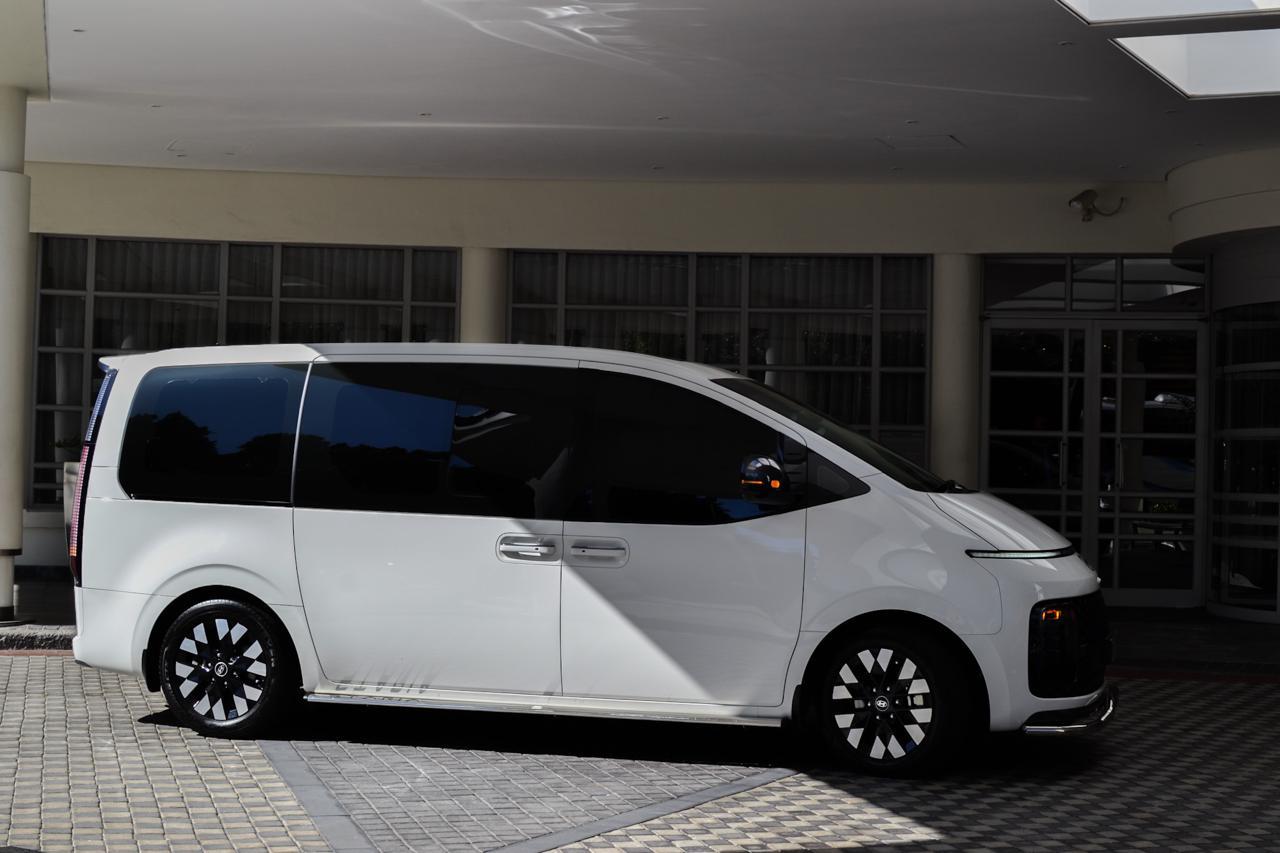
Diplomatic transport protocol comes down to forty seconds at the kerb. The head of mission has to step out of the correct door, at the correct minute, in front of the person waiting to greet them, and the evening's first photograph is taken before anyone has said a word. Everything the chauffeur does in the preceding half hour is arranged to make those forty seconds unremarkable.
This guide follows one arrival: a head of mission, a spouse and an aide attending a formal function at a hotel in the city centre. The conventions described are general ones. Services differ, and the mission's own protocol officer has the final word on every point.
The seats
Three passengers in a Hyundai Palisade Elite, which seats six plus the driver.
- The head of mission sits in the rear on the kerb side, diagonally behind the driver. South Africa drives on the left, so that is the rear left seat. It is the seat that stops in front of the greeter.
- The spouse sits in the rear on the right, behind the driver.
- The aide sits in front beside the driver, with the invitation, the gift if there is one and a phone that stays on.
This is the widely used convention for a right-hand-drive vehicle. Some services seat the spouse on the kerb side at social functions, and some principals simply have a preferred seat. The brief should state it, so that the driver holds the correct door at the residence and nobody rearranges themselves in a driveway.
The evening, minute by minute
The invitation says 18:30 for 19:00. The host's protocol office has given the mission an arrival time of 18:45, because heads of mission are being received in order.
| Time | What happens |
|---|---|
| 18:00 | Vehicle at the residence, interior cooled, jackets hung if wanted |
| 18:10 | Party seated, aide confirms the arrival door with the venue by message |
| 18:15 | Depart. The route is about 15 minutes at that hour |
| 18:32 | Vehicle holds in a side street two minutes from the hotel |
| 18:43 | Aide gets the word that the entrance is clear. Vehicle moves |
| 18:45 | Stop at the entrance, principal's door level with the greeter |
| 18:46 | Vehicle moves off when the aide signals |
| 18:46 to 21:15 | Vehicle waits nearby, driver with it, phone on |
| 21:15 | Aide messages. Vehicle at the door inside four minutes |
| 21:40 | Residence |
The hold at 18:32 is the part people leave out. Arriving thirteen minutes early is as wrong as arriving late: the greeter is occupied with someone else, or is absent, and the head of mission stands in a lobby. The driver leaves early enough to absorb the evening rush and then spends the surplus out of sight.
At the kerb
The vehicle stops so that the rear left door is where the greeter is standing. That means the driver needs to know in advance which entrance is in use and where the receiving line begins. "Main entrance" is too vague for a hotel with a porte-cochere, a side door and a banqueting entrance.
Then, by common practice:
- The aide steps out first and stands clear of the rear door.
- The door is opened for the head of mission by the driver, the aide or the venue's door staff. Decide which beforehand. Two people reaching for one handle is the usual small failure.
- The head of mission steps out and is greeted.
- The spouse either follows through the same kerb-side door or leaves by the right-hand door, opened by the driver, where the forecourt keeps that side clear of traffic. The mission chooses.
- The vehicle stays still until the party has turned towards the entrance and the aide gives the signal. Pulling away while the principal is mid-handshake is the other usual small failure.
Nothing is left in the cabin that will be needed inside. The aide carries the gift. Coats that are not wanted stay on the seat, and the vehicle is locked and attended all evening.
Where the vehicle waits and how fast it returns
A hotel forecourt is rarely available for three hours on a function night. The driver agrees a waiting place with the venue beforehand, usually a nearby parking area or a street within a few minutes, and tells the aide what the return time will be from there. Venue parking is for the client's account unless it is itemised on the quote.
The departure matters as much as the arrival. By convention the guest of honour leaves first and other guests do not leave before them, so the head of mission's departure time is set by the room. The aide gives the driver ten minutes' notice, the vehicle is at the door before the party reaches it, and the kerb-side door is the one facing the entrance again.
The booking, and its limits
This is an evening half day: five hours and 100 km inside the metro. From 18:00 to 21:40 is three hours and forty minutes, and the distance is about 20 km. There is margin on both for speeches that run long.
A half day is the wrong purchase for some evenings. If the function is at the hotel where the head of mission is staying, there is nothing to drive. If the mission's own driver and car are in Cape Town, use them. And a single drop-off with a walk home on a summer evening needs only a transfer.
West Landau supplies the vehicle and the chauffeur. It does not supply armoured vehicles, close protection officers, police escorts or blue-light driving, and the driver keeps to the ordinary rules of the road, which includes stopping at a closure like every other motorist. Security decisions belong to the mission. If the mission needs to ask about flags or pennants, clearances or any formal undertaking, raise it with the concierge when the brief is sent. Where a security officer travels with the party, route planning for official visitors describes who decides what.
Five things to ask any operator before a formal function
Ask them of West Landau as well.
- Will the driver have the arrival door and the greeter's position in writing before the evening?
- Who opens the principal's door, and has the driver been told?
- Where will the vehicle wait, and how many minutes is that from the entrance?
- Whose number does the aide message after 21:00? With West Landau it is the driver's direct number, sent the evening before with the driver's name and photo.
- Will the same driver do the return?
Common questions
Does the vehicle colour matter?
For some missions it does. The Palisade comes in pearl white or silver and the Staria in pearl white or black. A stated colour is honoured subject to availability.
What about a larger party?
A Staria seats eight. With two vehicles, convention has the junior vehicle arrive first and the principal's vehicle last. Seating a delegation across two vehicles covers the order, and national day reception transport covers an evening with four vehicles.
Can the driver be told the protocol on the night?
Yes, and it is a poor plan. Thirty seconds of instruction in a driveway is thirty seconds the aide does not have. A half-page brief sent the day before does the job.
Send the concierge the date, the collection address, the venue and the entrance in use, the arrival time given by the host, the seating and door preferences, and the aide's mobile number. The written quote and booking reference come back within the hour during concierge hours, 07:00 to 21:00. The vehicles are described on the corporate chauffeur page.