The Cape Town Cycle Tour closes much of the Cape Peninsula's road network on race day, so Cape Town Cycle Tour transport has to be planned around the route. The 109 km race loops the peninsula, including Chapman's Peak, with full road closures. The organisers list the next edition for 14 March 2027. Anyone moving on that day, riders, supporters or travellers heading to the airport, should settle routes and times before the weekend starts.
This guide covers what usually closes, how it affects ordinary trips, and how to move a group of riders and their supporters.
When is the Cape Town Cycle Tour in 2027?
The organisers list the 2027 race for Sunday 14 March. The 2026 edition ran on 8 March. Check the official site closer to the date for the final schedule, because start times and the programme of shorter races are confirmed in the weeks before.
March is a busy month in Cape Town. The Cape Town Carnival was held on 21 March in 2026, and the Cape Town International Jazz Festival on 27 and 28 March, so the city has a run of event weekends. Accommodation near the start fills early.
Which roads close for the Cycle Tour?
The closures change in detail every year, so treat this as an outline and check the official route and traffic notices before travelling.
In 2026, the 109 km race started at the Grand Parade in the city centre and finished on Helen Suzman Boulevard in Green Point. News reports listed closures on sections of:
- Helen Suzman Boulevard in Green Point
- the outbound M3 and outbound Nelson Mandela Boulevard, part of the N2 leaving the city
- the Hospital Bend interchange
- Main Road through the southern peninsula
- Chapman's Peak Drive
- Victoria Road through Camps Bay
Minor closures began on the Friday, with hard closures on the Saturday and race day. Some city centre streets around the start closed from the Saturday afternoon. The pattern matters more than the exact list: the route circles the peninsula, so for several hours on race morning it is difficult to cross from one side to the other.
Chapman's Peak Drive also closes from time to time for weather, maintenance or rockfall, and the guide to Chapman's Peak Drive explains how to check its status.
Airport transfers on Cycle Tour weekend
Cape Town International sits on the N2 east of the city, outside the race loop. The difficulty is getting from the city, the Atlantic Seaboard or the southern suburbs onto the N2 while the outbound routes are closed.
If you are flying out on race day, plan the transfer around the closure times rather than around the flight alone. Either leave before the closures start or after the roads reopen, and allow extra time either way. Hotels on the Atlantic Seaboard and in Green Point are the most affected, because the finish is on their doorstep.
Arriving riders are less affected, since most fly in during the days before. The driver tracks the flight and waits in the arrivals hall with a name board. The guide to airport transfers for groups covers how a team of riders is split across vehicles.
Bikes, bike boxes and the vehicles
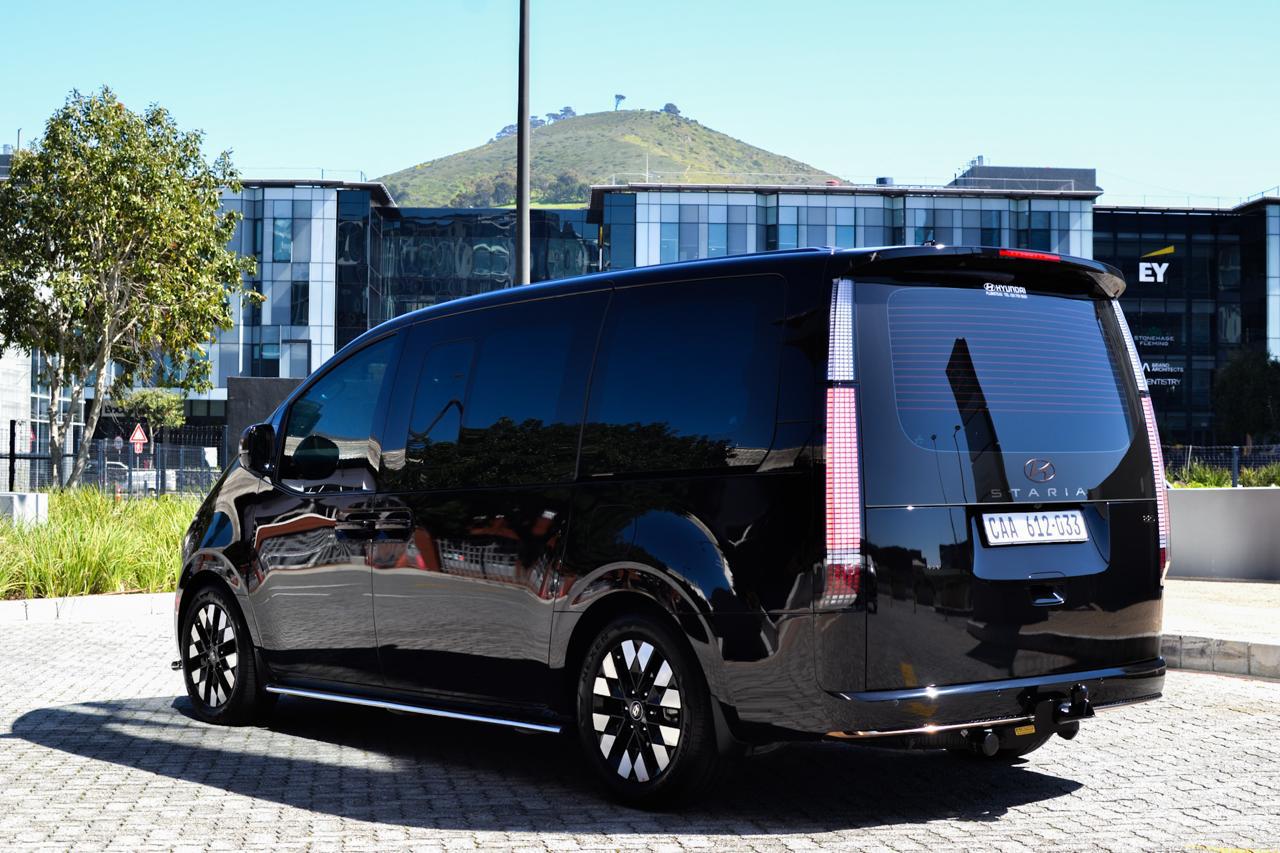
The Staria and Palisade are built for passengers and luggage. A full Staria takes around four large suitcases plus hand luggage, and a full Palisade three to four. Bike boxes are larger and heavier than suitcases, so a team flying in with bikes needs fewer passengers per vehicle or an extra vehicle for the boxes.
Send the concierge the number of riders, the number of bike boxes and their approximate size. A second vehicle is quoted rather than forcing boxes in on top of people. On race morning itself, the streets around a city centre start close early, so a rider staying nearby may find it simpler to ride to the start. The vehicles are more useful for supporters, families and luggage.
Moving supporters on race day
Supporters usually want two things: to see their rider somewhere on the route, and to be at the finish in Green Point. With roads closed around the loop, trying to see a rider at several points is unrealistic by car.
A practical plan picks one viewing point that can be reached before the closures, then the finish. The driver drops the group as close as the closures allow, waits nearby, and collects them when they are ready to move. Because each vehicle has its own driver, a larger group can split, with some going to a viewing point and others straight to the finish.
The guide to Cape Town traffic and the hours to avoid gives the usual weekday patterns, which matter for the days either side of the race.
When a driver is not worth it on race day
If you are staying in the city centre or Green Point and only need to reach the start and the finish, walking is often quicker than any vehicle on race morning. A driver earns its place for the trips that cross the closures: the airport run, a family coming in from the southern suburbs, or a team that needs luggage and bike boxes moved between the airport and the hotel.
The Two Oceans Marathon weekend guide covers the other big peninsula event in the autumn calendar.
Common questions
Can a vehicle drive inside the closed area on race day?
No vehicle should plan on it. Closed roads are closed to all traffic except authorised race vehicles. The driver plans the route around the closures and drops passengers as close as the open roads allow.
Should I book a transfer on race day itself?
If you are flying in or out that day, yes, and early. Give the concierge the flight time and hotel, and the transfer is timed around the closures.
Can riders and families travel in separate vehicles on one booking?
Yes. Parties of nine or more travel in two vehicles, one driver each, quoted as one booking. The vehicles can go to different places during the day.
How long should I book the vehicle for?
For supporters following the race and going to the finish, a half day of 5 hours inside the metro usually fits. For a team with airport runs on either side, a multi-day booking with one driver per vehicle may suit better.
To get a quote, send the dates, the hotel, the number of riders and supporters, the number of bike boxes and any flight times. The concierge replies with a written quote, and the group transport page explains how groups are moved across several vehicles.