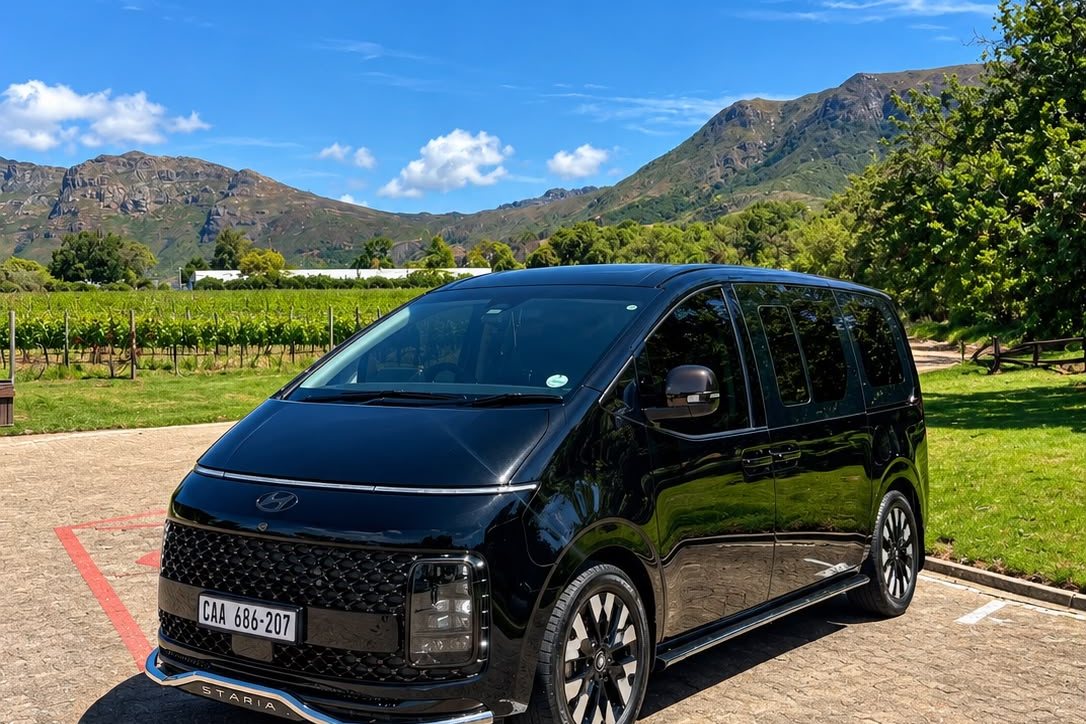
Due diligence site visit transport has to do two things at once. It has to get a buyer's team through three facilities in three days with enough time on each floor to form a view, and it has to do so without telling the people who work there that a sale is being discussed. One vehicle and one driver for all three days serve both aims, because the fewest possible people learn where the team went.
A leak during due diligence has a cost that is easy to state. Staff hear a rumour before management can speak to them, a competitor hears it a week later, and the seller's adviser spends the next fortnight on containment. Transport is a small part of that risk. It is also one of the few parts the buyer controls completely.
The team and the three days
Consider a buyer's team of five: two from the acquirer, a technical specialist, an accountant and a lawyer. They stay in the city centre and visit one facility a day.
| Day | Facility | From the city centre | Day's distance |
|---|---|---|---|
| One | Northern suburbs, near Bellville | about 20 km, 20 to 25 minutes | about 40 km |
| Two | Atlantis | about 40 km, 40 to 45 minutes | about 80 km |
| Three | Paarl, then the airport | about 60 km, 45 to 50 minutes | about 115 km |
Every day sits well inside a full day's 10 hours and 250 km. The vehicle is a Hyundai Staria Luxury. It seats eight, so five people have room for laptops, site boots and two boxes of documents that should not be carried through a reception area. The booking is a multi-day one, which keeps one dedicated driver for the whole programme at a discounted daily rate.
Who learns the itinerary
Count the people outside the deal team who know where it went.
With cars ordered leg by leg, three days produce at least six trips. Six drivers each collect five people in business clothes from a hotel and deliver them to a factory gate, and each trip sits in an app's history with both addresses. No single driver knows much. Together they hold the list of targets.
With one booking, one driver knows all three addresses, and so does the concierge who holds the run sheet. Two people. They are named, and the driver's name, photo and direct number reach the team leader the evening before the first day.
What "quiet" means at the gate
The vehicle, the name board and the words spoken at the boom are the three places a visit announces itself.
The vehicle. Ask the concierge to confirm that the vehicle carries no signage, and choose the colour least likely to look like an occasion at that site. Colour is honoured subject to availability. A clean people carrier at a factory gate reads as a supplier visit or an audit, which is what the seller's adviser will usually have told the gatehouse to expect.
The name board. If the team is collected at Cape Town International, the board in the arrivals hall shows whatever is agreed with the concierge. Initials or a neutral word work. The acquirer's company name on a board in a public hall is the cheapest leak there is.
The gate. The driver gives the name of the host contact and nothing about the purpose. Brief the driver on the exact words: "Visitors for" and the contact's name. If the gatehouse records a company for the vehicle, it is the chauffeur operator's, which is one more reason for the team not to arrive in the acquirer's own pool car.
What the team writes in the visitor register is for the seller's adviser to decide. It is outside the driver's part of the day.
Day two in Atlantis, timed
The evening before, the seller's adviser asks for a change. The team should arrive 30 minutes later and use the goods entrance on the far side, after the morning shift has clocked in and the yard is quiet.
| Time | Movement |
|---|---|
| 07:45 | Leave the hotel, moved from 07:15 |
| 08:30 | Goods entrance. The driver gives the host's name |
| 08:35 to 12:15 | Plant walk and records review |
| 12:15 | Vehicle returns to the entrance within five minutes of the message |
| 12:20 to 13:05 | Lunch off site. The team talks in the vehicle, away from the canteen |
| 13:10 to 15:30 | Management session |
| 15:35 | Leave. Debrief on the road |
| 16:20 | Hotel |
The change took one message to the concierge at 19:00. The driver already knew the main gate from the run sheet, so the new instruction was a single line about a different entrance. A car ordered that morning would have gone to the address on the map, which is the main gate, at shift change, with five strangers in the back.
The day runs 8 hours 35 minutes from door to door and uses about 80 km.
During the visit the vehicle stands off site, out of view of the offices and the canteen, and comes back on a message. A chauffeur sitting in visitor parking for four hours invites the question of who the car is waiting for.
In the vehicle the team will talk, and should. The 45 minutes back from Atlantis is the first chance to compare notes while they are fresh. Fewer people know the itinerary and hear those conversations when one driver does the whole programme. What a chauffeur hears sets out what discretion means in practice and what the client should still do, such as keeping the target's name off anything left on a seat.
The limits need stating. West Landau makes no claim here about signed undertakings or vetting procedures. If your process requires a supplier to sign something, raise it with the concierge when you send the brief and get the answer in writing before you rely on it.
Questions to put to any operator
Ask these of us and of anyone else quoting.
- Will the same driver do all three days, and what happens if that driver is ill on day two?
- Does the vehicle carry any signage?
- What will the name board say, and who agrees the wording?
- Where does the vehicle wait during a site visit, and how fast does it return?
- Who at your office sees the addresses?
- Can the invoice describe the service without listing the sites?
A vague answer to the fifth question is the one to worry about.
When this is more caution than you need
If the transaction has been announced, or the staff at each site have been told, book the days as an ordinary site visit and drop the precautions. If one adviser is visiting one facility, a small hired car driven by that adviser draws less notice than any chauffeured vehicle, and we would say so. The arrangement described here earns its place when five people visit several sites and silence has a value.
One more honest line. No vehicle hides five visitors in site boots walking a production floor. The cover for that is the seller's to provide.
Common questions
What if the deal stops after day two?
On a multi-day booking the cancellation windows apply to each day. Cancelling day three the evening before falls within 24 hours, so that day is retained in full. More than 48 hours ahead, a day can be cancelled or moved at no charge.
Can documents stay in the vehicle?
Bags and boxes stay aboard between stops, which keeps them out of reception areas. The team should still take anything irreplaceable with them. The vehicle is detailed between hires, so clear it fully on the last day.
Can the same vehicle take the team to the airport on day three?
Yes. Paarl is about 55 km and about 45 minutes from Cape Town International, so the last site and the flight fit in one day. Leave a margin for late afternoon traffic.
Send the concierge the three dates, the hotel, the number of people and the three addresses with the host contact and the gate for each. Say that the visit is sensitive, and state the wording for the name board. The reply is a written quote with a booking reference. Longer engagements are covered in two weeks on site: a charter for an audit or deal team, and the fleet is on the corporate chauffeur page.