Book one full day when the programme has more than two stops or any meeting that can overrun. Book separate transfers when the legs are few and every end time is firm. On the six-leg day below, the full day chauffeur vs transfers comparison comes out at one booking against six, one driver briefed against six, about 12 minutes of kerb waiting against about 60, and one message against three when the third meeting runs late.
The comparison uses no prices. Count the minutes and the people, then put your own value on them and set it against the two quotes.
The day: six legs, five meetings, one flight
Take a team of four who check out of a city centre hotel at 08:00 with four suitcases and fly home at 19:30.
| Leg | From and to | Leaves | Drive allowed | Meeting at the far end |
|---|---|---|---|---|
| 1 | Hotel to Bellville, about 20 km | 08:00 | 30 minutes | 08:45 to 10:15 |
| 2 | Bellville to Century City | 10:25 | 25 minutes | 11:00 to 12:00 |
| 3 | Century City to the Foreshore, about 12 km | 12:10 | 25 minutes | 12:45 to 14:00, over lunch |
| 4 | Foreshore to the V&A Waterfront | 14:10 | 10 minutes | 14:30 to 15:30 |
| 5 | Waterfront to the city centre | 15:40 | 10 minutes | 16:00 to 17:00 |
| 6 | City centre to the airport, about 20 km | 17:10 | 45 minutes | Flight at 19:30 |
The day covers about 70 km and runs from 08:00 to 17:55. Against a full day's allowance, that is 70 of 250 km and 9 hours 55 minutes of 10 hours. Be clear about what that means. On distance this is a small day. Hours are what the booking is for.
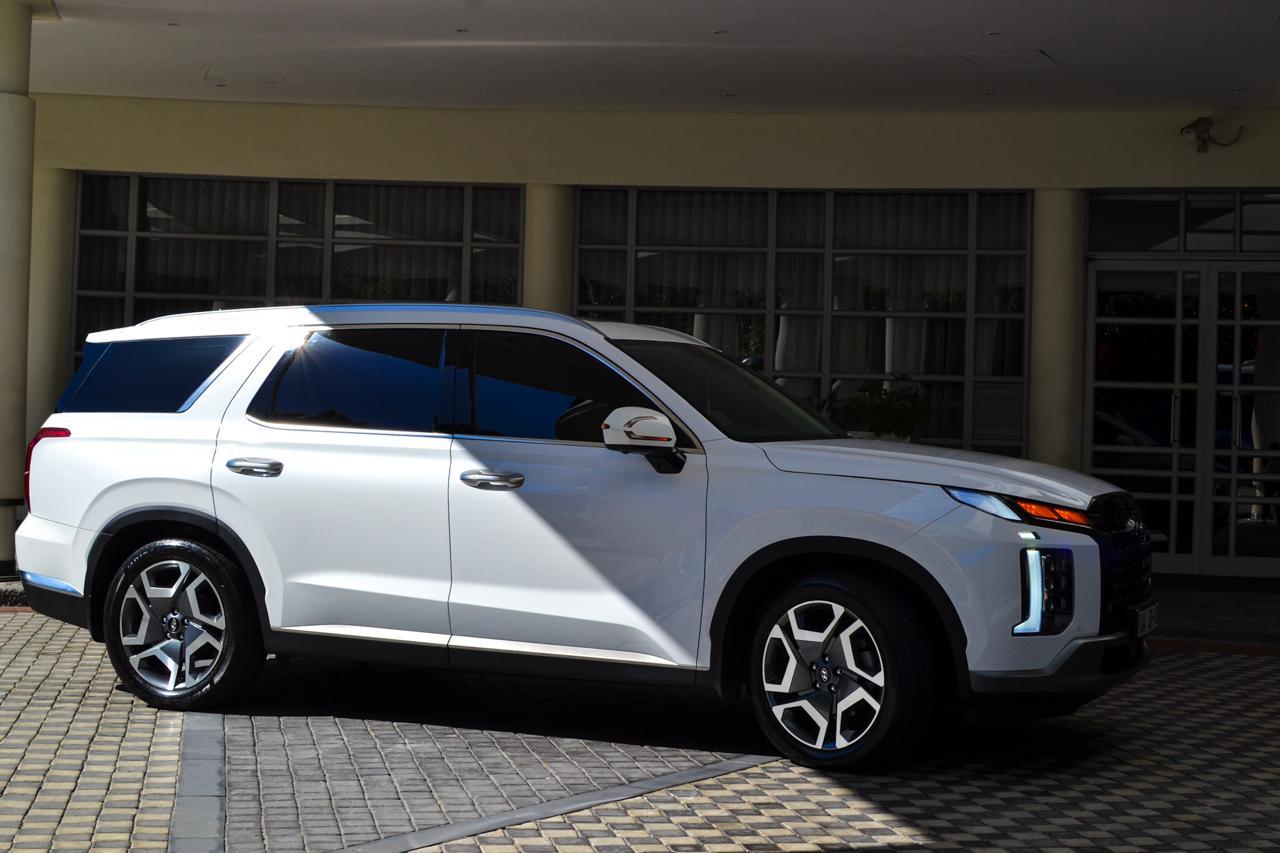
The vehicle is a Hyundai Palisade Elite, which seats six passengers and takes four people with four large suitcases.
Full day chauffeur vs transfers, counted
The middle column assumes six pre-booked transfers in a vehicle large enough for four people and their luggage. If the plan is ordinary e-hailing cars instead, four people with four suitcases need two cars a leg, and every figure in that column doubles.
| What is counted | Six separate transfers | One full-day booking |
|---|---|---|
| Bookings to make, check and confirm | 6 | 1 |
| Pickup times that must be fixed in advance | 6 | 1 |
| Drivers who must be told the door and the party | up to 6 | 1 |
| People outside the team who learn part of the itinerary | up to 6 | 1 |
| Times four suitcases are loaded | 6 | 1 |
| Meetings the suitcases are carried into | 5 | 0 |
| Kerb handovers, where the team and a vehicle have to find each other | 6 | 1 |
| Minutes of kerb waiting, at an assumed 10 a handover against 2 for a vehicle at the door | 60 | 12 |
| Messages needed when one meeting overruns | 1 for every later leg | 1 |
Two notes on the assumptions. The 10 minutes is a planning figure for the time between leaving a meeting room and the wheels turning when a car has to arrive and find the party. The 2 minutes is the walk to a vehicle standing at the agreed door. Replace both with what you see on your own trips. The counts of bookings, drivers and suitcases need no assumption at all.
When the third meeting overruns
The lunch meeting on the Foreshore is the one the team flew in for. It ends at 14:35, which is 35 minutes late.
| Time | Six separate transfers | One full-day booking |
|---|---|---|
| 14:10 | Car four arrives at the Foreshore as booked. Nobody comes out | The vehicle is at the door, where it has stood since 12:35 |
| 14:15 | Someone leaves the table to message car four, then the hosts at the Waterfront | One person sends one line from the table: 35 minutes late |
| 14:35 | The meeting ends. Car four has waited 25 minutes at the operator's waiting terms, or has left for its next job | The meeting ends. The team walks to the vehicle |
| 14:45 | If car four left, a replacement is being found for four people and four suitcases | Arrive at the Waterfront, 15 minutes after the planned start |
| 15:40 | Car five arrives at the Waterfront as booked, while meeting four is still running | Meeting four is given its full hour. The driver has already said what that does to the next leg |
| 15:45 | Meeting four ends. Car five has waited since 15:40, or its time was moved by another message | Leave the Waterfront |
| 16:00 | On time if car five waited. Late if a new car had to be found | In the room, having arrived at 15:55 |
| 17:10 | Car six is due. Somebody has to decide whether to move it, and by how much | Leave when the meeting ends. The driver has given the latest departure for a 19:30 flight |
The overrun was 35 minutes. On the left it produced three sets of messages and a real chance of a missing vehicle at 14:35, and each of those tasks fell to one of the four people who were meant to be listening to the client. On the right it produced one line, and everything else was the driver's job.
There is an honest cost on the right as well. If meeting five also ends late, the day passes ten hours, and time beyond that is billed per hour at the rate on the quote. Agree beforehand who may approve it.
The driver who holds the day
The table counts drivers briefed. It is worth saying what a brief contains. The door at each address, which is rarely the street number. The name of the person receiving the team. The fact that four suitcases are aboard and must not be visible on a seat. The time that cannot move, which on this day is the flight.
One driver is told once, the evening before, and the team receives that driver's name, photo and direct number. Six drivers each know one leg. None of them knows that the party has a flight at 19:30 until the last one is told. What as-directed means describes how the day runs once the driver has the whole picture.
When six transfers is the right answer
Often it is fewer than six, and then transfers win.
- Arrive, work, leave. A team that lands, spends the day in one office and flies out needs two transfers. A vehicle standing outside for eight hours moves nobody.
- Two stops with firm times. A morning meeting that ends at a known hour and an afternoon one near the hotel can be done with three short trips.
- One precinct. If the five meetings were all on the Foreshore, the team would walk and store the luggage at the hotel.
The dividing line most operators use is the one we use. More than two stops, or an end time nobody can promise, and the vehicle should stay. When an executive does not need a chauffeur lists the cases where a day booking is the wrong purchase.
How to run the comparison on your own day
- List the legs. Count them.
- Mark every meeting whose end time you would not bet on.
- Count the bags and where they would sit during each meeting.
- Multiply the legs by your own kerb-waiting figure.
- Ask for both quotes in writing: the full day, and the transfers leg by leg, with each operator's waiting terms.
A transfer quote that says nothing about waiting has left out the part of the day that goes wrong. To put a value on the minutes, use the method in what the hour between meetings is worth.
Common questions
Would a half day cover this?
No. A half day is 5 hours and 100 km inside the metro. The distance fits and the clock does not, so the booking is a full day.
What if the day has only three legs?
Then compare honestly. Three legs with firm times are usually three transfers. Three legs with one open-ended meeting are usually a half day, if they fit inside five hours.
Does the airport leg count as part of the day?
Yes. On a full day the last leg can end at departures, and the luggage has been aboard since 08:00. Allow for the late afternoon, because weekday 17:00 is the most congested hour on Cape Town's roads.
Can the same vehicle do this for several days?
A multi-day booking keeps one dedicated driver per vehicle for the whole booking, at a discounted daily rate. How a multi-day full-day charter works explains it.
Send the concierge the date, the six addresses in order with the door and the receiving person at each, the number of people and bags, and the flight. Ask for the full day in writing and compare it with your transfer quotes using the table above. What a day includes is on the corporate chauffeur page.