A mobile office chauffeur booking gives a travelling executive one private room that follows the diary. On the morning below, a chief financial officer has a meeting that ends at 10:30, a results call at 11:00 and a second meeting at 12:30 in another district. The vehicle has to deliver a parked, quiet hour in the right place, then a two-minute walk to the next door. A half day covers it.
The call is the fixed point. A meeting can start five minutes late. A results call with analysts dialled in starts at 11:00.
What the morning looks like
Take a first meeting in the city centre and a second in Century City, about 12 km away and about 15 to 20 minutes outside peak traffic. The booking is a half day, 5 hours and 100 km inside the metro, from 08:45 to 13:45.
- 08:45 Collect at the hotel. Laptop bag, printed pack and a jacket go aboard and stay aboard.
- 09:00 to 10:30 Meeting one, city centre. The vehicle waits at the agreed door.
- 10:32 Wheels turning. The chief financial officer reads the opening statement once on the way.
- 10:55 Parked at Century City, at a spot chosen the day before, two minutes on foot from the second address.
- 11:00 to 12:00 Results call, taken parked.
- 12:00 to 12:25 Time in hand. Notes, a message to the chief executive, water.
- 12:30 Meeting two.
- 13:45 Back at the hotel, or onward by arrangement.
Distance for the morning is under 30 km. The half day is chosen on hours, and it has an hour to spare.
Why the call is taken parked
There is a tempting alternative: leave the city centre at 10:55 and take the call on the move. Do not plan it that way for a call you are running.
A moving vehicle changes mobile cells as it goes, and any call can clip or drop at a handover. Road noise rises on a freeway. The speaker looks down at a page of figures while the cabin turns through an interchange. None of it is dramatic. It only has to happen once, in the sentence that contains the earnings number.
Parked, the same cabin is a small office. The engine can idle for the air conditioning, the privacy glass keeps the screen and the papers out of view from the pavement, and nobody walks past the door. The drive happens first, in the 25 minutes when a dropped signal costs nothing.
Mobile office chauffeur basics: what works in the cabin, and what does not
- Listening and speaking on a voice call. Parked, reliably. Moving, acceptable for a call you are only listening to.
- Email and documents. Every West Landau vehicle has Wi-Fi. In-vehicle Wi-Fi anywhere depends on the mobile network at that spot, so choose the parking place for signal as well as for the walk. Keep the phone's own connection as the second line.
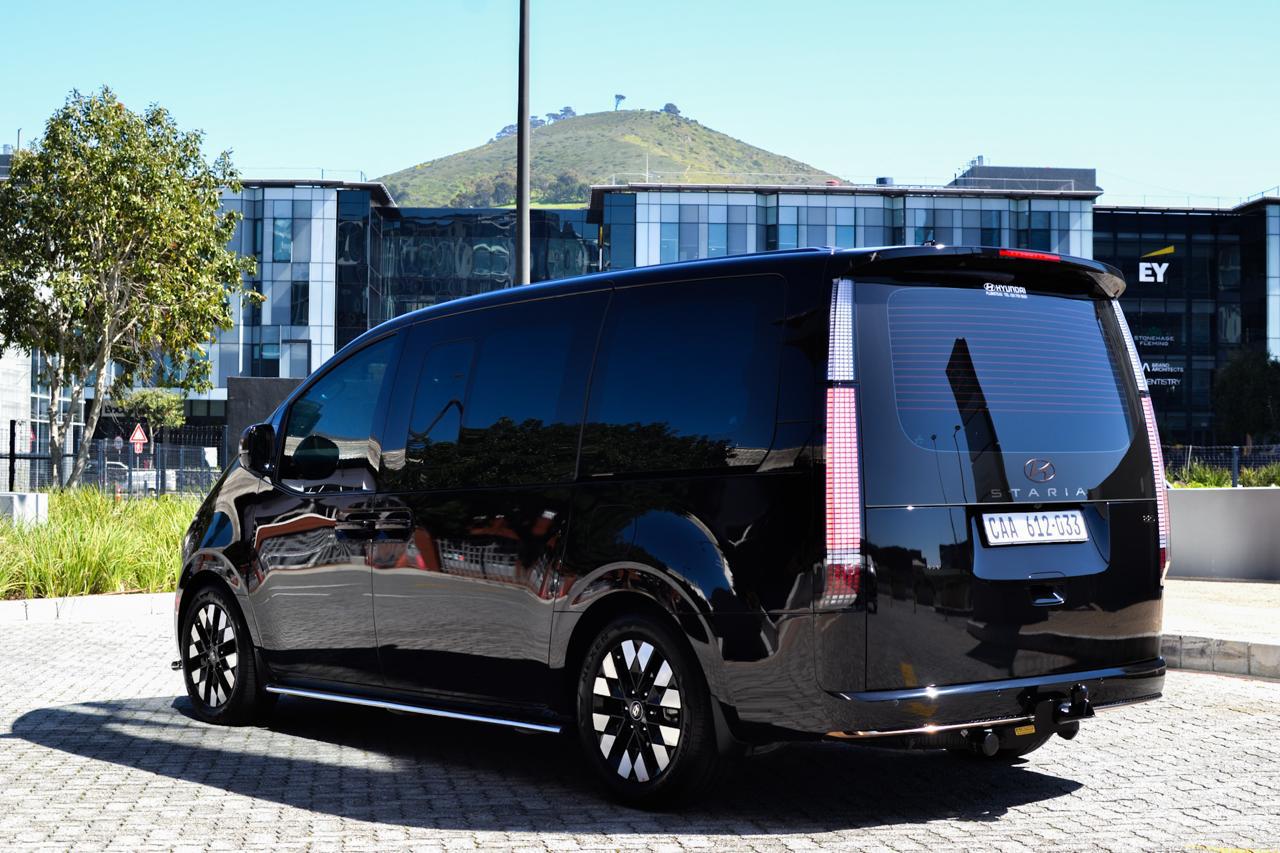
- A two-person briefing. The back of a Palisade Elite or a Staria Luxury seats colleagues close enough to share a screen. On a longer drive this is the best use of the time.
- Papers. A printed pack can lie open on the seat, and it stays in the vehicle during the meeting.
- Changing gear between meetings. Jacket on a hanger, cold water, five minutes of quiet before a difficult room.
Four things do not work, and saying so saves a bad morning.
- Presenting slides on video. A laptop camera in a car seat, with a window behind the speaker, looks like what it is. If the call needs the speaker on screen for an hour, use a meeting room at one of the two addresses and let the vehicle wait.
- A long typing session on the move. Twenty minutes of editing a spreadsheet on urban roads is unpleasant for most people. Read on the move, and write when parked.
- Printing, scanning or a second screen. It is a vehicle. Bring what the call needs on paper.
- A guaranteed signal on every road. No operator can promise that. What you can ask for is a stop chosen in advance, in a place where coverage is known to be good.
Where the vehicle stops, and who is in it
Three instructions belong in the brief for a morning like this.
First, the parking spot. "Near the second meeting" is too vague. Ask for a named place within two minutes on foot, legal to stand in for an hour, and away from a loading bay. Venue parking is for the client's account unless it is on the quote.
Second, the driver during the call. If the call is price-sensitive, ask for the driver to step out and stand near the vehicle for the hour. Say so in the brief so that it is expected and nobody has to ask at 10:58. What a chauffeur hears goes further into discretion and what remains the client's own responsibility.
Third, the fallback. Decide beforehand what happens if meeting one overruns.
When meeting one ends at 10:45
It ends late, as first meetings do. At 10:45 there are 15 minutes to the call and about 25 minutes of road to Century City.
The plan made the day before has a cut-off. If the chief financial officer is not in the vehicle by 10:35, the call is taken parked in the city centre, at a second spot the driver already knows, and the drive happens afterwards. Leaving at 12:02 puts the vehicle at the second address at about 12:25. The time in hand is gone, the walk is still two minutes, and the 12:30 meeting starts on time.
Nobody decides anything at the kerb. The driver was told the rule, so at 10:36 the vehicle moves to the fallback spot without a message being sent.
Now run it with a car ordered at 10:45. It arrives at perhaps 10:53. The call starts in the back of a stranger's car as it pulls into traffic, with a driver who has had no brief and a radio that may or may not be off. That is the choice in plain terms: 60 minutes of the most exposed speaking the executive does all quarter, in a room nobody chose.
Is a half day enough, or is this a transfer?
If the morning were one meeting and a call that could be taken at the hotel, the right booking would be nothing, or a single car across town. Two addresses and a fixed call between them are what justify keeping the vehicle. The test is in point-to-point or hourly chauffeur, and the wider arithmetic of minutes recovered is in what the hour between meetings is worth.
If the afternoon adds a third and fourth address, or anything outside the metro, the booking becomes a full day of 10 hours and 250 km.
Common questions
Is the Wi-Fi good enough for a video call?
For a parked call in an area with good mobile coverage, usually. Treat it as one of two connections and keep the phone ready as the other. For a call that cannot fail, voice is safer than video.
Can the driver leave the vehicle during a confidential call?
Ask for it in the brief. The driver stands near the vehicle and returns when the door opens. Raise any further confidentiality requirement with the concierge when you send the brief.
Which vehicle is better to work in?
For one or two people, the Palisade Elite. For three or four who need to face a shared screen and spread papers, the Staria Luxury has more room. Staria or Palisade compares them.
Send the concierge the date, both addresses with the doors, the time and length of the call, and whether the driver should step out. Ask for the parking spot and the fallback spot to be named on the confirmation. The half-day and full-day inclusions are on the corporate chauffeur page.