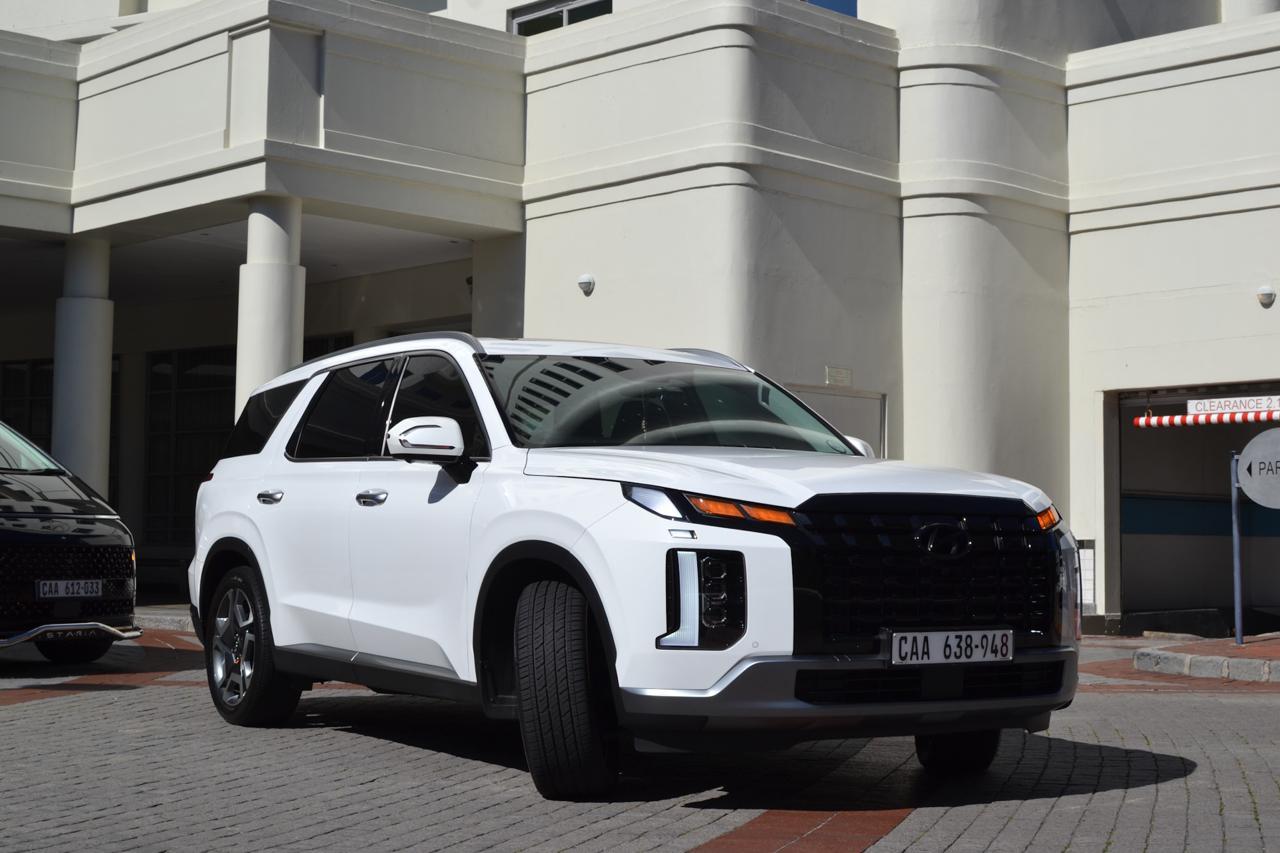
Community project visit transport is judged in the first two minutes at the gate. The visit exists so that five people can see a project as it runs on an ordinary morning. A vehicle that arrives at the wrong time, stops in the wrong place or empties all at once turns an ordinary morning into an occasion, and the visitors then see the occasion. A half-day booking with one driver, briefed on the host's wishes, keeps the arrival small.
Consider a donor party of five visiting an early childhood centre in Philippi during the morning session. The principal has asked them to come at 09:30, after the parents have dropped their children and the first activity is under way. The party travels in one Hyundai Palisade, five people in six seats, and the centre is about 20 km from their hotel in the city centre.
What a good arrival protects
The centre's morning. A teacher who leaves a class to greet visitors at the gate has left twenty children. If the teacher is there for ten minutes because the party came early, that is ten minutes of the session gone for every child in the room, on the one day the funder came to see it.
It also protects the visit. Five people who walk in behind the principal, one or two at a time, are absorbed into the room. Five people who step out of a vehicle together at the gate while parents are still arriving become the event of the day.
Community project visit transport planned around the centre's morning
Ask the principal for the time, then build backwards from it. The half day runs like this.
| Time | Movement |
|---|---|
| 08:30 | Booking starts. Vehicle at the hotel door |
| 08:45 | Depart the city centre |
| 09:10 | Arrive in Philippi, about 20 to 25 minutes outside peak traffic. Hold a few streets away |
| 09:28 | Move to the stopping place the principal named |
| 09:30 | Lead visitor and one colleague step out and are met |
| 09:33 | The other three follow. Vehicle moves to its waiting place |
| 10:55 | Driver receives the message and returns |
| 11:00 | Depart, before the centre begins lunch |
| 11:35 | Meeting with the host organisation's director in the city |
| 13:15 | Hotel |
That is four and three-quarter hours of a half day's five, and about 45 km of the 100 km included.
Now the change. At 08:50, as the vehicle leaves the hotel, the principal phones the lead visitor. A meeting with parents has run over and the request is for 09:45. On a day booking this costs nothing. The driver takes the same route, holds fifteen minutes longer away from the centre and pulls up at 09:43. The departure moves to 11:15 and the city meeting is told. With a transfer booked to a fixed time, the party would have been standing at the gate at 09:30, which is the thing the principal phoned to prevent.
Where the vehicle stops and waits
The host names the place. The gate itself is usually the wrong one, because it is where parents and children come and go. The driver stops where the principal has said, on the side that lets passengers step onto the pavement and away from traffic, and holds the door.
Once the party is inside, the vehicle leaves the frontage. It waits where the host suggested, with the engine off. A vehicle idling beside a playground wall for ninety minutes is noise and fumes for the children on the other side of it.
The driver stays with the vehicle and comes into the centre only if invited. No photographs are taken from the vehicle and no calls are made at the fence. Bags and laptops stay aboard, so nobody carries a backpack through a classroom of four-year-olds.
Colour, size and who steps out first
A vehicle says something before anyone gets out. West Landau's vehicles come in pearl white, black and silver, and the colour can be requested when booking, subject to availability. Ask the host. Some prefer a lighter colour that reads as a family vehicle in a residential street. Others have no view.
Size is the other choice. Five people fit in a Palisade, which has six passenger seats. A Staria seats eight and is the right vehicle when two of the host organisation's staff ride with the party. Do not book two vehicles for five people in order to be comfortable. Two vehicles outside a small centre is a convoy.
First out of the vehicle are the lead visitor and one colleague, or better, a member of the host organisation's staff if one is travelling with the party. The principal greets two people. The remaining three follow a few minutes later and join quietly.
Leaving works the same way in reverse. The lead visitor says the goodbyes while the others walk to the vehicle. The driver has brought it back on a message sent five minutes earlier, so nobody stands in the road waiting.
Questions to settle with the host the week before
- What time suits the centre, and what time is too early?
- Where should the vehicle stop, and where should it wait?
- Who will meet the party, and at which door?
- Would you prefer that one of your staff travels with us?
- How many visitors in a room at once is comfortable?
- When should we be gone?
The answers go into the brief for the concierge, word for word. The driver then knows them the evening before, and the lead visitor does not have to give directions from the back seat.
When to leave the chauffeur out of it
If the host organisation offers to bring one or two visitors in its own car, accept. Arriving with people the centre knows is better than any arrangement a visitor can make.
If the host asks the party to walk the last stretch with a staff member, do that, and let the vehicle wait where it is told. And if the project is one stop on a full day of visits across two areas, a half day is the wrong booking. That day is set out in donor site visits in Cape Town.
West Landau's part is the vehicle and the driver. How visitors conduct themselves inside the centre, and what may be photographed, is between the donor and the host.
Common questions
Can we choose the colour of the vehicle?
Yes. Pearl, black or silver can be requested and is honoured subject to availability. Give the preference when you send the brief, since it is harder to change the day before.
Does the driver come inside with the party?
Only if the host extends the invitation. Otherwise the driver stays with the vehicle at the agreed waiting place and returns when the lead visitor sends a message.
What if the centre asks us to come later on the day?
Tell the driver. On a half-day or full-day booking the vehicle is yours for the booked hours, so a later arrival is absorbed. If the change pushes the day past the booked hours, overtime is billed per hour at the rate on the quote.
Can staff from the host organisation travel with us?
Yes. Rates are per vehicle, never per person. With more than six passengers in total, book the Staria.
Send the concierge the date, the hotel, the number of visitors, the centre's address, the time the principal has asked for and the principal's answers on stopping and waiting. The written quote and booking reference arrive within the hour during business hours. The manager approving the trip can read the duty of care questions for field visits, and the vehicles are on the corporate chauffeur page.