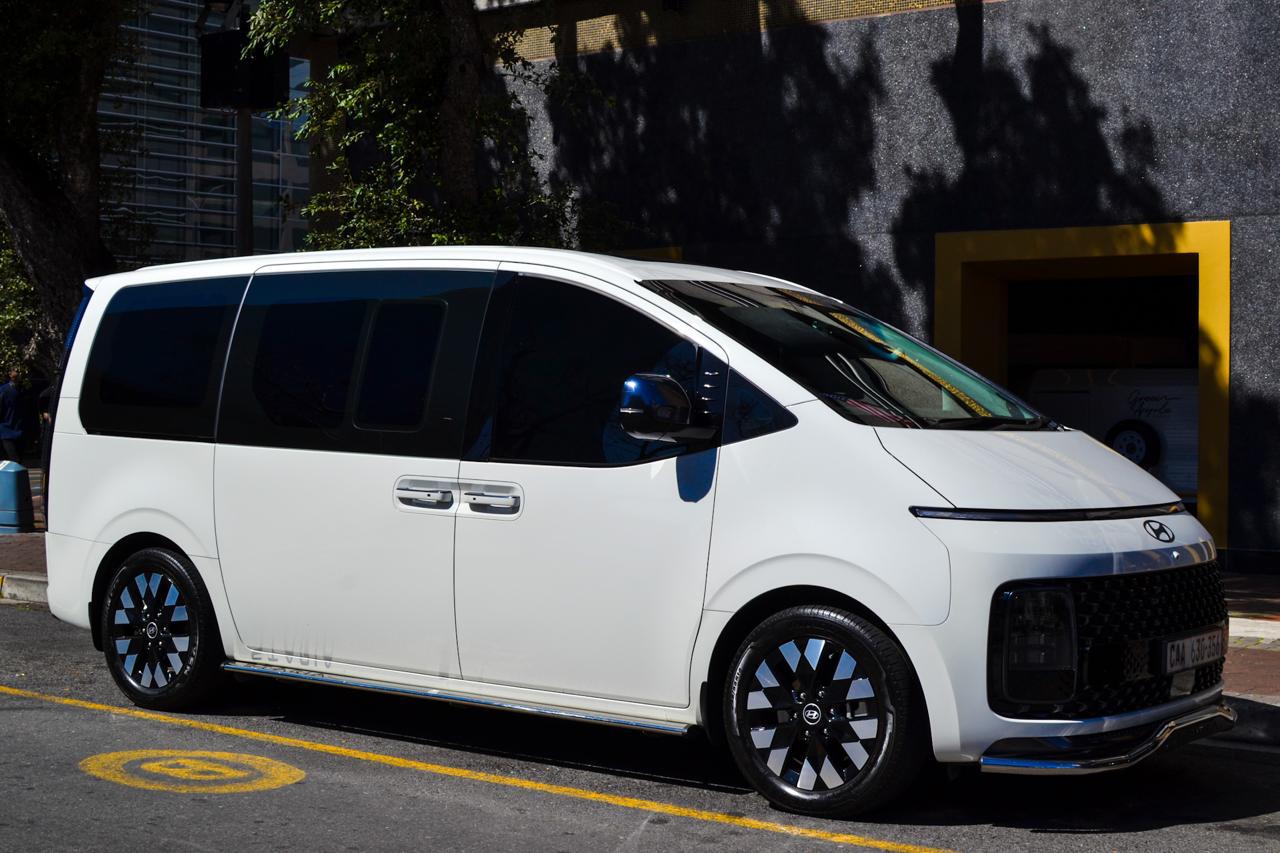
Donor site visit transport in Cape Town has one job. It puts the programme officer in front of each project at the time the host asked for, with the host's own staff in the same vehicle, and it gets the team back to the city with enough afternoon left to debrief while the detail is fresh. One Hyundai Staria on a full-day booking does that, because the vehicle stays with the party from the hotel door to the last meeting.
Take a foundation programme officer and three colleagues with a single day in the city. They are visiting two projects in Khayelitsha and one in Philippi. At 15:30 they sit down in the city centre to agree what goes into the recommendation. Two staff of the host organisation join them for the project visits.
What the day has to produce
The visit informs a grant decision. The programme officer needs to see each project while it is running and to hear from the people who run it. The debrief has to happen the same afternoon, before four sets of notes drift apart.
The host has a different stake. A project manager who has arranged a session around a 09:00 arrival has moved other people's mornings to do it. Twenty minutes lost on the way to the first project is twenty minutes a facilitator spends holding a room. It also pushes the second visit into the lunch hour and the third into the time when staff are closing up. The visitors lose a little. The host loses more, and the host is the one being assessed.
The day plan for three projects and a debrief
| Time | Movement | Notes |
|---|---|---|
| 07:45 | Hotel, city centre | Four visitors board. The driver holds the run sheet and a contact number for each project |
| 08:00 | Host organisation's office | Two host staff board. Six of eight seats in use |
| 08:45 | First project, Khayelitsha | About 30 km from the city centre. Fifteen minutes in hand before the 09:00 start |
| 10:30 | Depart | The driver brings the vehicle to the agreed spot five minutes earlier |
| 10:45 | Second project, Khayelitsha | A short drive from the first |
| 12:15 | Depart | Lunch is taken with the second project or on the way, as the host prefers |
| 12:45 | Third project, Philippi | |
| 14:15 | Depart for the city | Philippi is about 20 km from the centre, 20 to 25 minutes outside peak traffic |
| 14:50 | Host staff dropped at their office | |
| 15:10 | Debrief venue, city centre | Twenty minutes before the 15:30 start |
| 17:15 | Hotel | End of the booking |
The arithmetic is simple. From 07:45 to 17:15 is nine and a half hours of a full day's ten. The distance is about 75 km of the 250 km included. Six people sit in a vehicle that seats eight, so the two spare seats take the bags and the laptops that nobody wants to carry through a project.
Donor site visit transport in Cape Town: full day or half day
A half day is 5 hours and 100 km inside the metro. The distance fits. The hours do not. Three visits of ninety minutes each come to four and a half hours before the vehicle has moved, and the debrief adds nearly two more.
The slack in this plan is thirty minutes. If the debrief is likely to run past 17:45, say so in the brief. Time beyond ten hours is billed per hour at the rate on the quote, and it is better that the person who approves overtime is named before the day than phoned during it.
One vehicle with the host aboard, against a string of separate cars
| One Staria, full-day booking | Cars booked leg by leg | |
|---|---|---|
| Drivers briefed | One, the evening before | A new one at every departure |
| Host staff | Ride with the visitors | Travel separately and meet at the gate |
| Departures | The vehicle is at the door | Each of five waits for a car to accept and arrive |
| Bags and laptops | Stay aboard with the driver | Carried into every project |
| A visit that overruns | One message moves the next arrival | The booked car leaves, or the meter runs |
Count the departures: the hotel, three projects and the debrief venue. If each of the five costs ten minutes of standing at a gate waiting for a car, the day has lost fifty minutes, which is more than half of one project visit. Six people rarely fit in one e-hailing car, so every wait is doubled.
The larger loss is the briefing. The drive from the city to Khayelitsha takes about thirty minutes. With the host's staff in the cabin, that half hour covers who the visitors will meet, what the project wants to show and which questions are better asked in the office than in front of participants. Without it, the same conversation takes the first fifteen minutes of the visit, in a doorway.
Arriving, waiting and leaving
The host decides where the vehicle stops. The driver pulls up there, opens the door on the kerb side and moves off to the agreed waiting place once the party is inside. The engine is off while it waits. The driver stays with the vehicle, which is why the bags can stay too.
Colour can be requested when booking, pearl, black or silver, and is honoured subject to availability. Ask the host which they would prefer outside their building. The etiquette is covered in more detail in arriving at a community project.
By the third project the cabin matters. Cold water after a morning on foot, a quiet row of seats and Wi-Fi for the officer who needs to send one message before the debrief.
When this is the wrong booking
One visitor seeing one project is better off travelling with the host organisation's own staff in their own car. It costs nothing and the visitor arrives with people the project already knows.
A single project close to the city and a two-hour visit is a half day at most. A group of nine or more needs a second vehicle, quoted on the same booking, and a group above 36 is beyond the five-vehicle fleet.
West Landau supplies the vehicle and the driver. The host organisation remains the host and the guide to its own work. Security decisions for the visiting team sit with the foundation's own travel policy, and the vehicle fits into whatever that policy requires.
Common questions
Can the host organisation's staff ride with the visiting team?
Yes. Rates are per vehicle, never per person, so six people in a Staria cost the same as four. The vehicle seats eight passengers plus the driver.
What happens if a project visit overruns?
The lead visitor or the host messages the driver or the concierge. The driver adjusts the route and the host phones ahead to the next project. If the day runs past ten hours, the extra time is billed per hour at the quoted rate.
What does the rate include?
The driver, fuel, tolls, Wi-Fi and chilled water. Meals, entrance fees and venue parking are for the client's own account unless they are itemised on the quote.
Can the same driver cover a second or third day?
Multi-day bookings run at a discounted daily rate with one dedicated driver per vehicle for the whole booking. A longer review is set out in a four-day donor review across project sites.
Send the concierge the date, the hotel, the number of visitors and host staff, the address and contact person for each project, the start time each host has asked for and the debrief venue. A written quote and a booking reference come back within the hour during business hours. The vehicles are on the corporate chauffeur page, and the manager signing off the trip may want the duty of care questions for field visits and the note on putting the vehicle in a grant budget.