NGO field visit transport is a duty of care decision before it is a logistics one. The manager who signs the travel request is answerable for who drives the team, who knows where they are and who picks up the phone when the plan changes. Ten questions settle most of that. Put them to every operator you are considering, including this one, and compare the answers in writing.
Say you are a programme manager with six colleagues arriving for a week of field visits. None of them has been to South Africa. They land on a Sunday evening, and on Monday they visit partner projects in Khayelitsha and Philippi. You will be with them for some of the week and at your desk for the rest. Your organisation's travel policy asks you to record how ground transport was arranged.
NGO field visit transport and what the manager answers for
Three things, and none of them is the route. You should know the name of every person who drives your colleagues. You should be able to reach the vehicle at any hour it is in use. And when something changes, one message should reach the person who can act on it.
Consider the alternative as arithmetic. Four movements a day for five days is twenty movements. Six people do not fit in a standard e-hailing car, so each movement is two cars. That is forty trips with forty drivers nobody in your organisation has spoken to, and forty entries if your policy asks for a log. A day booking makes it one driver per day, named the evening before.
The ten questions, with our answers
-
Who is driving, and when will I know? West Landau sends the driver's name, photo and direct number the evening before. Forward it to every traveller and to your own duty phone.
-
Can I see the operating licence, the driver's professional driving permit and the passenger insurance? They are shown on request. Ask before you pay, and keep copies with the travel file.
-
Does one driver stay with the group? On a half-day or full-day booking the vehicle and driver stay with the party from the first pickup to the last drop. On a multi-day booking there is one dedicated driver per vehicle for the whole booking.
-
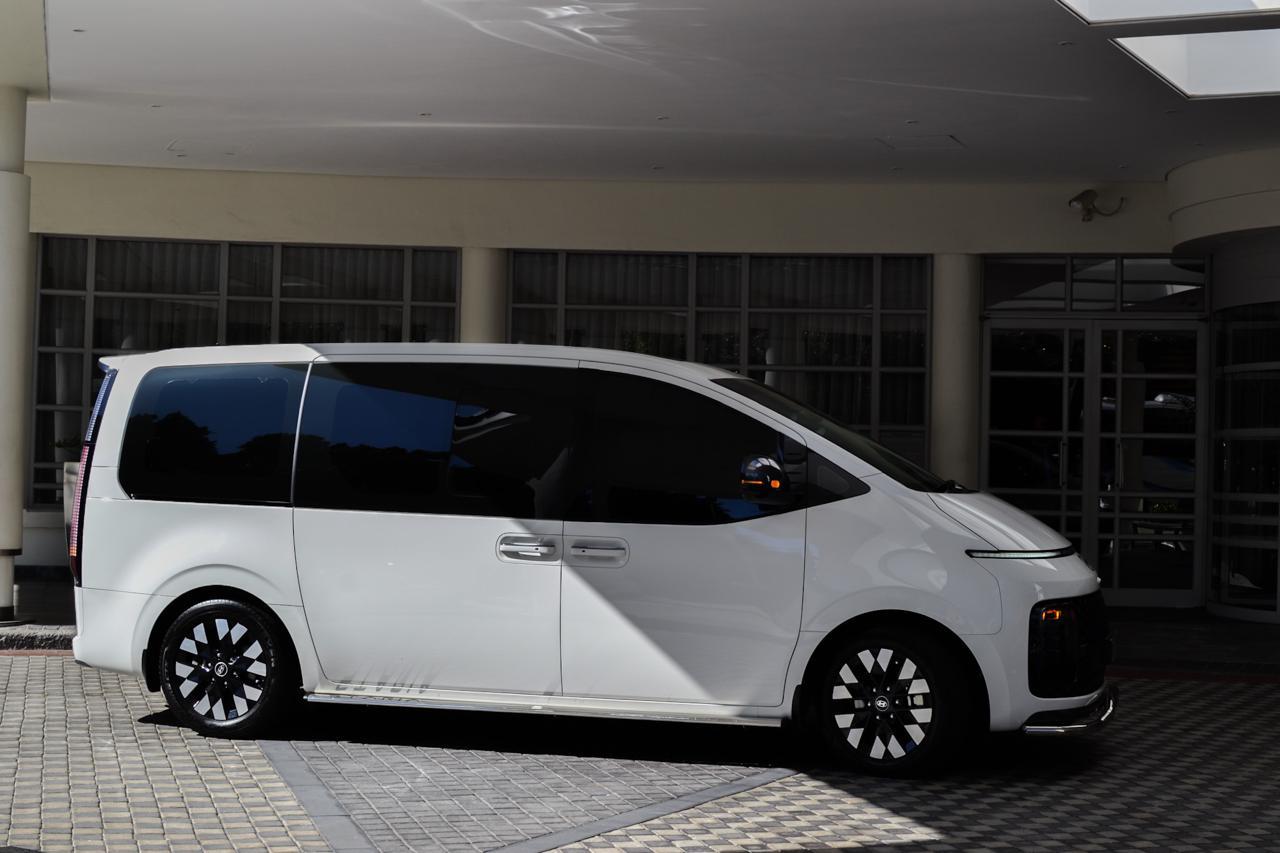
How many seats, and what happens when a host joins? A Hyundai Staria seats eight passengers plus the driver and a Hyundai Palisade seats six. Seven people in a Staria leave one seat for a partner's staff member. Nine or more travel in two vehicles, one driver each, quoted as one booking.
-
Who answers at 06:30 and at 22:00? The concierge is on duty every day from 07:00 to 21:00. Outside those hours the contact is the driver's direct number.
-
What happens when the flight is late? The flight is tracked. The driver waits in the arrivals hall with a name board, and the first 60 minutes after actual touchdown are included. If the airline cancels or diverts, the transfer moves to the new arrival at no charge, subject to availability.
-
What does the name board say? Whatever you agree with the concierge. A traveller's name, initials, the organisation or an event name. Some organisations prefer not to display their name in an arrivals hall, and that is a one-line instruction.
-
What is in the rate, and what adds to it? The driver, fuel, tolls, Wi-Fi and chilled water are included. A full day is 10 hours and 250 km, a half day is 5 hours and 100 km inside the metro. Overtime is billed per hour and extra distance per km at the rates on the written quote. Entrance fees and venue parking are for your account unless itemised.
-
What if we cancel a day? Cancellation is free more than 48 hours before pickup, 50% is retained within 48 hours and 100% within 24 hours or for a no-show. On a multi-day booking the windows apply to each day separately.
-
What do you not do? West Landau supplies chauffeur-driven vehicles in the Western Cape. It does not supply armoured vehicles, close protection officers or escorts, and its drivers obey the ordinary rules of the road. Security decisions belong to your organisation, and legs in other provinces are booked with an operator there.
An operator who answers all ten in writing within a day has told you something. So has one who answers four.
The first field day, hour by hour
Here is the Monday, with the duty of care points marked.
- Sunday, about 18:00. The driver's name, photo and number reach you. You forward them to the six travellers.
- Sunday evening. The flight lands. The driver is in the arrivals hall with the agreed name board. Seven people have more luggage than one Staria takes with every seat full, so a second vehicle is on the quote for this leg.
- Monday 07:45. The Staria is at the hotel door. Seven board.
- 08:30. First project, Khayelitsha, about 30 km from the city centre. The partner's coordinator meets the party at the vehicle.
- 11:00. Depart for Philippi.
- 11:30. Second project. Lunch with the partner.
- 14:00. Depart for the city, about 20 km.
- 14:45. Partner office in town for a review meeting.
- 16:30. Hotel. You message the duty phone that all seven are back.
That is eight and three-quarter hours of a full day's ten, and about 70 km of the 250 km included.
What stays with your organisation
A chauffeur service covers the vehicle, the door and the timing. The rest is yours and should be written down as yours.
Your security adviser or travel policy decides where the team goes, at what hours and with whom. The partner organisation decides how visitors arrive at its projects, where the vehicle stops and who meets it. The driver follows both. Neither decision is one a transport operator should make for you, and an operator who offers to is overreaching.
If your policy asks for specifics that are not in the ten answers above, such as questions about driver screening or vehicle monitoring, put them in the brief to the concierge and ask for the reply in writing. Do not accept a verbal assurance from any operator on a point your policy requires you to document.
When a booked vehicle is the wrong answer
An organisation with its own vehicles and its own drivers, already covered by its travel policy, should use them. A booked chauffeur adds nothing there.
Two colleagues who know the city and have one meeting in town do not need a vehicle waiting for five hours. A partner who insists on collecting visitors personally should be allowed to. The arrival goes better when the project's own people bring the guests in.
A team of more than 36 is beyond the fleet of five vehicles and should be split across days or handed to a coach operator.
Common questions
Will the same driver cover the whole week?
On a multi-day booking, yes. One dedicated driver per vehicle stays for the whole booking, at a discounted daily rate. By Wednesday the driver knows the hotel entrance, the partners' gates and how long the team takes to leave a room.
How do we reach the vehicle while the team is inside a project?
On the driver's direct number, which every traveller has from the evening before. The driver stays with the vehicle and brings it to the agreed spot when messaged.
Can we be invoiced, or must we pay before the visit?
A booking is confirmed on full payment by EFT. Corporate and multi-day clients can be invoiced monthly on account by arrangement, so raise it when you send the brief.
The brief goes to the concierge with the dates, the flights, the hotel, the number of travellers, each project address with a contact person and any requirement from your travel policy. A written quote and a booking reference follow. The broader picture is in duty of care for visiting staff and how to check a chauffeur service before booking. For the day itself, see donor site visits in Cape Town and arriving at a community project. Vehicles and day bookings are on the corporate chauffeur page.