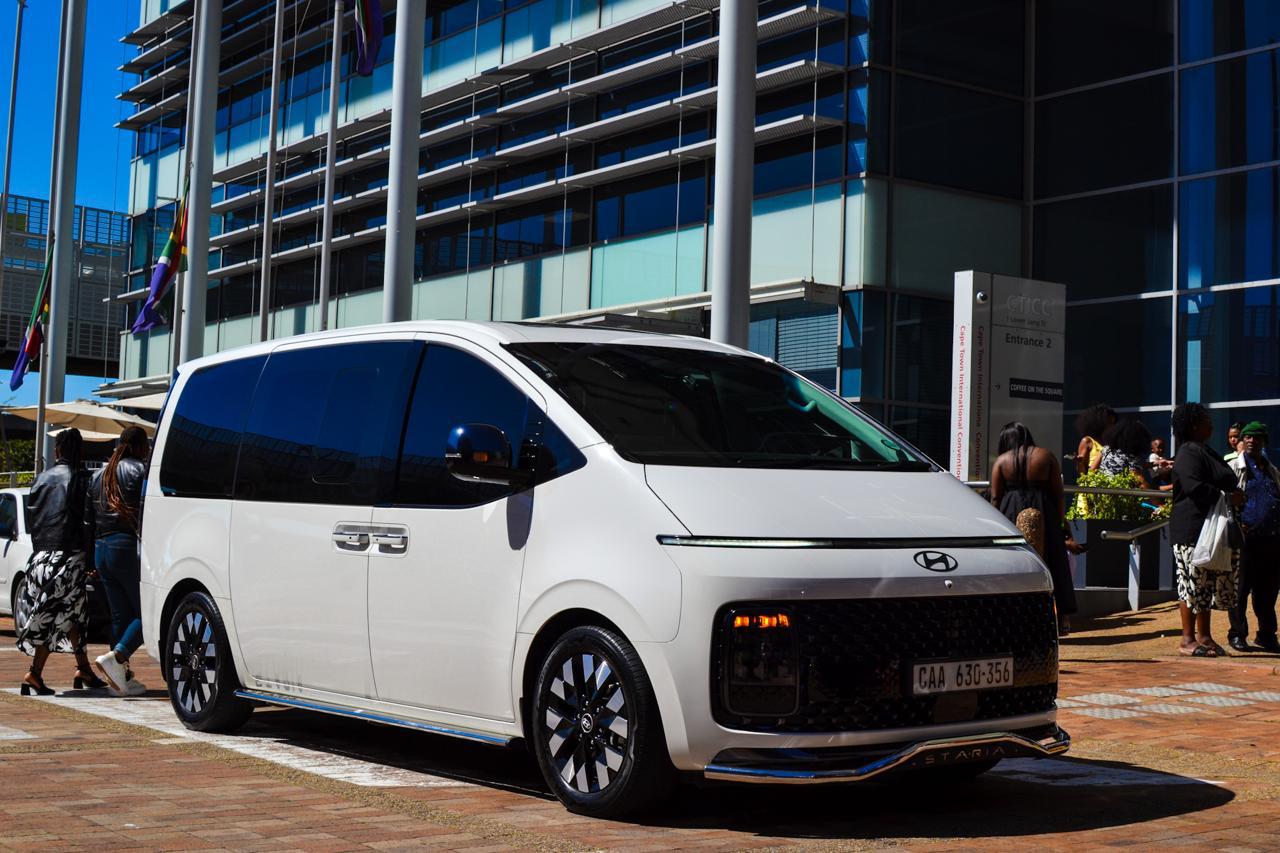
Conference VIP transport in Cape Town has a narrow purpose. Every speaker is in the green room thirty minutes before their session, and every sponsor's executive is where the sponsorship agreement says they will be. Two vehicles on a full-day booking, kept apart from the delegate shuttles and run from one list, do that for a programme of twelve people.
Take a conference organiser with a one-day programme at the CTICC. There are eight speakers and four executives from sponsoring companies. Two speakers fly in on the morning itself, one leaves for the airport straight after a keynote, and the sponsors have a lunch at the V&A Waterfront. The day ends with a speakers' dinner.
What the organiser is protecting
The programme. A delegate who is ten minutes late misses ten minutes. A speaker who is ten minutes late leaves a full hall looking at an empty stage and a moderator filling time. The session then overruns into the next, and the afternoon never recovers.
Sponsors are the other exposure. An executive whose company has paid to host a lunch should not be standing at a taxi rank outside the venue at 12:20 with a phone in hand.
Twelve people, two vehicles
A Hyundai Staria seats eight passengers and a Hyundai Palisade seats six. That is fourteen seats for twelve people. The twelve never travel together, though, so the real test is how many movements overlap. On this programme the most that happens at once is two, which is why two vehicles are enough and one is not.
Each vehicle has its own driver for the whole day. Both drivers hold the same list.
The movement list for the day:
| Time | Vehicle | Movement |
|---|---|---|
| 07:00 | Staria | Hotel pickup, four speakers for the opening sessions, to the CTICC |
| 07:10 | Palisade | Second hotel, three sponsor executives, to the CTICC |
| 08:15 | Palisade | To the airport for a speaker landing at 09:05 |
| 09:30 | Staria | Hotel pickup, two speakers for the late morning |
| 09:45 | Palisade | Speaker at the CTICC, session at 11:00 |
| 10:40 | Palisade | To the airport for a speaker landing at 11:20, session at 14:00 |
| 12:15 | Staria | Four sponsor executives to the Waterfront lunch |
| 12:40 | Palisade | Keynote speaker from the CTICC to the airport for a 14:30 flight |
| 14:00 | Staria | Sponsor executives back to the CTICC |
| 16:45 | Both | On standby for speakers returning to hotels |
| 18:30 | Both | Hotels to the speakers' dinner |
| 19:00 | Vehicles released. The return from dinner is a separate evening booking or a short ride from the restaurant |
The day runs for twelve hours, 07:00 to 19:00, which is over a full day's ten. That is stated on the quote as two hours of overtime per vehicle, billed per hour at the quoted rate, or the organiser shortens the day by releasing the vehicles at 17:00 and booking the dinner movement separately. Either is fine. What does not work is discovering it at 17:00.
Distance is no concern. The airport is about 20 km from the CTICC, and the Palisade's three airport runs come to about 120 km of the 250 km included. The Staria stays in town and barely passes 30 km.
Which CTICC, and which door
The convention centre is two buildings. CTICC 1 is at the bottom of Long Street and CTICC 2 is on the Foreshore at Heerengracht, a short walk apart. A speaker dropped at the wrong one arrives at the green room out of breath, having crossed between buildings with a laptop bag.
For each speaker the list says the building, the entrance the organiser wants used and the name of the person meeting them at the kerb. That person is the handover. The driver opens the door, the speaker is greeted by name and walked in, and the vehicle moves off. Speakers do not queue at delegate registration.
Drivers do not park at the door and wait. They drop, move to an agreed holding place nearby and return on a message. The organiser agrees that holding place with the venue beforehand. See CTICC conference transport for the venue in more detail.
The morning flight lands 50 minutes late
The speaker due at 09:05 lands at 09:55. The session is at 11:00.
The flight is tracked, so the driver and the concierge know before the organiser does. The driver waits in the arrivals hall with the name board. The first 60 minutes after actual touchdown are included, and the speaker is in the vehicle by 10:20. The airport to the CTICC is 20 to 25 minutes outside peak traffic, which puts the vehicle at the door at about 10:45, fifteen minutes before the speaker is due on stage.
That is too tight, and the organiser has had an hour's warning to act on it. The 11:00 and 11:45 sessions swap. The moderator is told at 10:00, with an hour to prepare.
There is a knock-on. The Palisade was due back at the airport for the 11:20 arrival and now cannot leave the CTICC before 10:50. It reaches arrivals at about 11:15, before that speaker has collected a bag. The second speaker's session is at 14:00, so the margin holds.
With two unconnected airport transfers booked from different suppliers, nobody would have seen that the first delay touched the second pickup until a speaker phoned from the arrivals hall.
Conference VIP transport kept apart from the delegate shuttles
Delegate shuttles run loops to a timetable. They are built for volume and they leave when the clock says so. A speaker placed on a shuttle is on the audience's schedule.
| Delegate shuttle | Dedicated VIP vehicles | |
|---|---|---|
| Runs to | A timetable | A named person's session |
| Waits for a late flight | No | Yes, the flight is tracked |
| Handover at the venue | Registration queue | Named greeter at an agreed door |
| Change on the day | Announced to all | One message to the concierge |
| Conversation in the cabin | Among forty delegates | Private, with Wi-Fi and privacy glass |
The last row matters to sponsors. The ten minutes to the Waterfront is where four executives agree who says what at lunch.
When the organiser does not need this
Speakers staying in hotels beside the convention centre can walk, and most would prefer to. Do not book a vehicle to carry someone a few hundred metres.
A local speaker driving in needs a parking bay from the venue. And a programme with forty VIPs, or more than two movements at once all day, needs more vehicles than this plan. All five West Landau vehicles together carry 36 passengers. Beyond that, split the work with a second operator and say so early.
Common questions
How far ahead should the vehicles be booked?
As soon as the speaker list is firm. In large event weeks at the CTICC, vehicles can be committed early, and a fleet of five is finite.
What goes on the name board at the airport?
Whatever is agreed with the concierge: the speaker's name, initials or the event name. Some speakers prefer the event name.
Who does the driver take instructions from?
One person on the organiser's side, named in the brief. Speakers and sponsors ask that person, and that person messages the concierge. Two people issuing changes is how a vehicle ends up at the wrong hotel.
What about the ride home after dinner?
Concierge hours end at 21:00. If the vehicles are booked for the evening, the contact after that is the driver's direct number, sent the evening before.
Send the concierge the date, the building and entrance, the list of twelve with hotels, flight numbers and session times, the greeter's name and number, and the single contact for changes. Back comes a written quote with a booking reference. Related reading: conference week for a delegation, the leadership car, and the vehicles on the corporate chauffeur page.