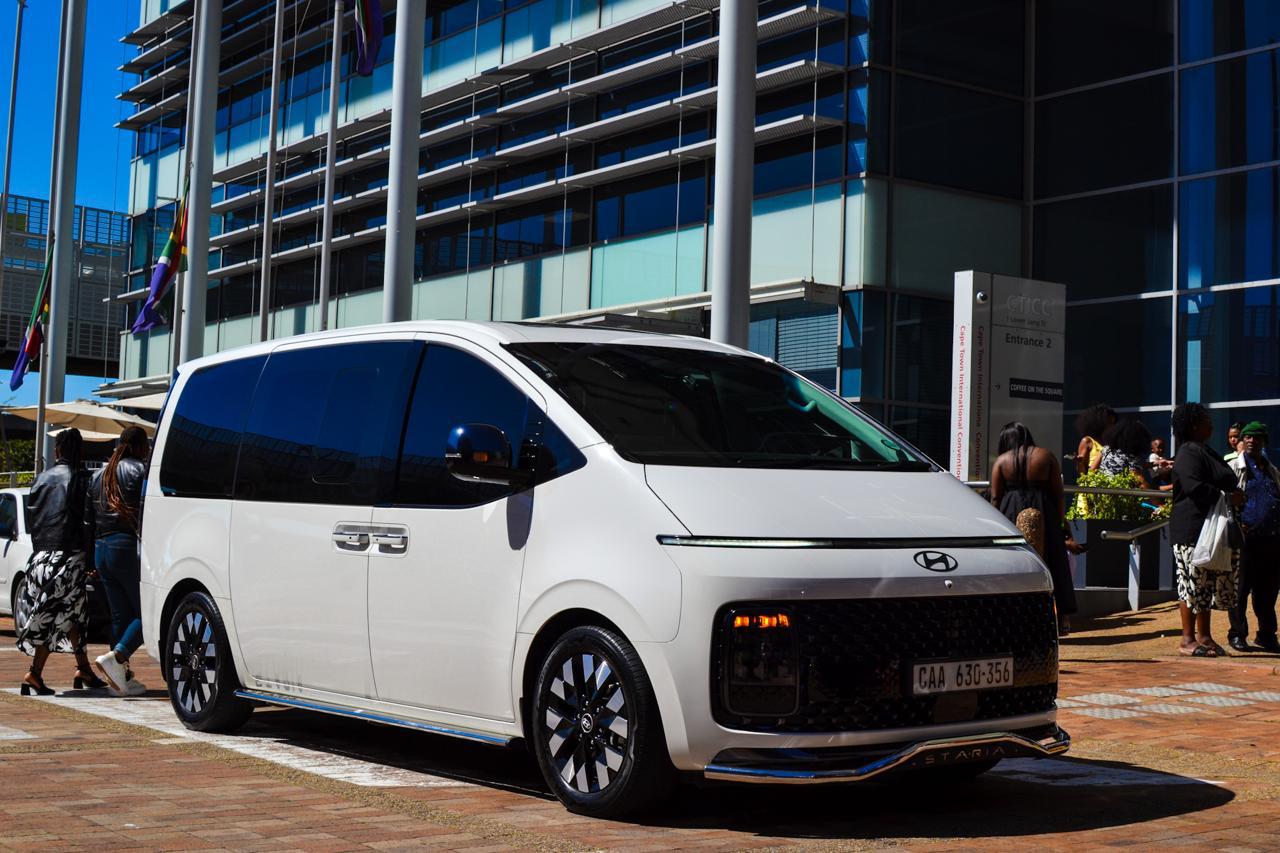
CTICC conference transport works best when it is planned around three things: which of the two CTICC buildings your sessions are in, where your delegates and speakers are staying, and the few fixed moments in the programme when everyone moves at once. Get those right, and a small fleet of chauffeur-driven vehicles covers airport arrivals, the daily runs to the venue and the evening functions without anyone waiting on a kerb.
This guide is written for the person holding the delegate list. It covers the venue layout, the daily pattern, the evening problem and how many vehicles a programme actually needs.
Know which CTICC building you are in
The Cape Town International Convention Centre is two buildings on the Foreshore. CTICC 1 is at Convention Square, 1 Lower Long Street. CTICC 2 is on the corner of Heerengracht and Rua Bartholomeu Dias. The two are connected by a pedestrian link the venue calls the Skybridge, so delegates can walk between them once inside.
For transport, the address matters more than the bridge. A driver dropping a speaker at the wrong building means a walk through registration crowds with a laptop bag, ten minutes before a keynote. Put the building, and the entrance if your organiser has specified one, on every booking. Check with the CTICC event team which drop-off and marshalling arrangements apply during your event, because they can change for large shows.
The daily pattern of a CTICC conference
Most conferences have the same shape each day, and the transport plan follows it:
| Moment | What moves | What it needs |
|---|---|---|
| Morning arrival | Delegates from hotels to the venue, usually within the same hour | Vehicles timed to the first session, with a margin for the morning traffic |
| During the day | Speakers, VIPs and side meetings off site | One or two vehicles on hourly hire, held near the venue |
| Late afternoon | A wave back to hotels, often at the busiest time on the roads | Collections agreed in advance, not called for on the day |
| Evening | Dinners and receptions across the city | Out and back trips with a fixed return time, or vehicles held for the evening |
Delegates staying on the Foreshore can often walk. Those at the V&A Waterfront, in the City Bowl, at Sea Point or out at Century City cannot, and those are the runs that fill a morning. The N1 and N2 are busiest on weekday mornings and late afternoons, so a pickup that takes twenty minutes at 10:00 can take much longer at 07:45. Our guide to Cape Town traffic peak hours has the figures.
Speakers, VIPs and the vehicles that wait
The cheapest plan is to move everyone in fixed loops. The plan that protects the event is to keep at least one vehicle and driver on hourly hire for the people whose timing cannot slip: keynote speakers, a sponsor's chief executive, a minister's delegation.
A held vehicle means a speaker who finishes a panel at 11:40 can be at a client lunch in Constantia without anyone calling for a car. It also means a late change to the programme is handled by one message to the concierge rather than a new booking. The corporate chauffeur page explains half day and full day hire. A half day is five hours and 100 km inside the metro, a full day ten hours and 250 km, and the rate is per vehicle.
If you are unsure which suits a particular person, point-to-point or hourly chauffeur sets out how to decide.
Evening functions: plan the return, not just the arrival
Planners usually think about getting guests to a gala dinner. The harder half is getting them back. Guests leave at different times, some have been drinking, and a venue in the Winelands or on the Atlantic Seaboard is not somewhere to look for e-hailing cars at 23:30.
Agree the return in advance. Either set fixed departure times, one at 22:00 and one at the end of the night, or keep the vehicles at the venue for the evening. With several vehicles, part of the group can leave early without stranding the rest, because each vehicle has its own driver.
How many vehicles CTICC conference transport needs
West Landau runs three 2025 Hyundai Staria Luxury (eight passengers each) and two 2025 Hyundai Palisade Elite (six passengers each). All five together move 36 passengers with five drivers, quoted and managed as one booking.
A rough guide for planners:
- A single speaker or executive: one Palisade, often on hourly hire for the conference days.
- A team of seven or eight: one Staria, which also carries a reasonable amount of luggage on arrival day.
- Nine to sixteen: two vehicles, one driver each, on one booking.
- Up to 36: the full fleet, usually split across hotels in the morning and regrouped for the evening.
Groups much larger than that are better served by the venue's coach operators for the mass movements, with chauffeur-driven vehicles kept for the speakers and VIPs. That combination is common, and it is often the sensible answer.
Airport arrivals are usually the first test of a conference plan. Delegate airport transfers covers how to manage several flights, and for the large annual events, see the notes on Mining Indaba transport and Africa Tech Festival.
Common questions
How far is the CTICC from the airport?
Cape Town International is about 20 km from the city centre along the N2. Outside peak traffic the drive to the Foreshore takes about 20 to 25 minutes. In the weekday rush allow considerably longer.
Can the same driver look after our speakers all week?
Yes. Multi-day bookings come with one dedicated driver per vehicle for the whole booking, at a discounted daily rate.
Can you send drivers' details to our delegates?
Yes. The evening before each day, the driver's name, photo and direct number are sent, to you or directly to the traveller, as you prefer.
Can our company be invoiced after the event?
Corporate and multi-day clients can be invoiced monthly on account by arrangement with the concierge. Other bookings are confirmed on full payment by EFT.
For a quote, send the concierge the event dates, the CTICC building, the hotels involved, the number of delegates and speakers, and the fixed moments in the programme. The reply is a written quote with a booking reference.