The plenary is the reason a delegation is sent to an intergovernmental meeting. The bilaterals in hotel meeting rooms are where it gets its own work done. Delegate transport at an intergovernmental meeting in Cape Town exists to make the second possible without damaging the first, so that a head of delegation can leave the CTICC at 12:40, hold two bilaterals and be back in the hall for a 16:00 session. For a delegation of seven that takes one vehicle, on half days and one full day, and on some days no vehicle at all.
Why the side programme is the hard part
Cape Town hosts meetings of this kind. G20 finance ministers and central bank governors met at the CTICC in February 2025. The organisers of such a meeting look after the official programme, and may provide shuttles between the listed hotels and the venue on a fixed timetable.
Bilaterals do not run on that timetable. They are agreed late, between two delegations, at whichever hotel one of them is staying in. They move by half an hour on the morning itself. A shuttle that leaves the CTICC on the hour is no use for a 14:30 meeting in a hotel that is not on its route.
The CTICC itself needs one line in every brief. CTICC 1 is at the bottom of Long Street and CTICC 2 is on the Foreshore at Heerengracht. They are a short walk apart, and a driver sent to "the CTICC entrance" has two buildings to choose from. Name the building and the door.
The week, day by day
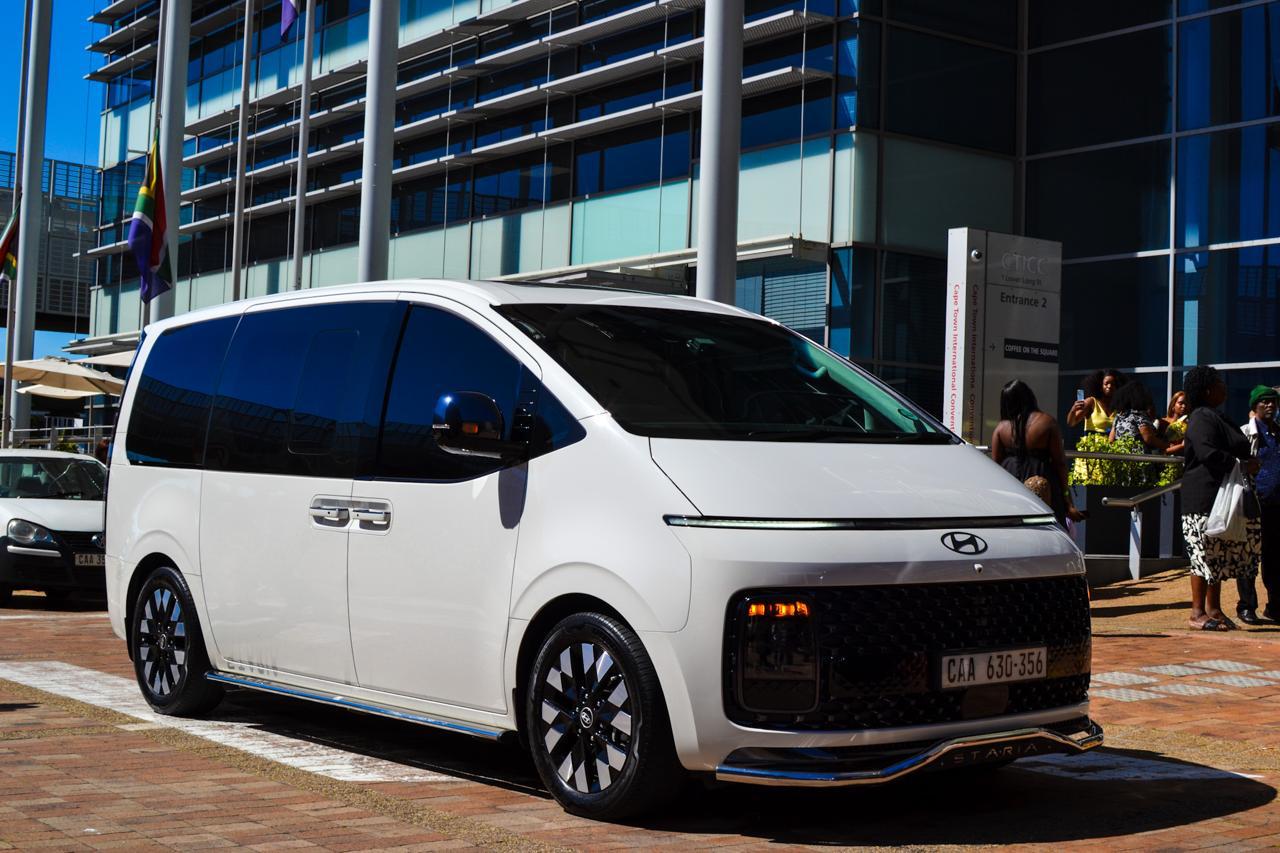
Take a national delegation of seven: a head of delegation, a deputy and five officials. They stay at a hotel a short walk from the venue. One Hyundai Staria Luxury seats eight passengers, so the whole delegation fits with a seat to spare.
| Day | Programme | Booking |
|---|---|---|
| Sunday | Arrival | Airport leg to the hotel, on the same quote |
| Monday | Opening and plenary, all day at the CTICC | None. The delegation walks |
| Tuesday | Two bilaterals at hotels between sessions | Half day, 12:30 to 17:30 |
| Wednesday | Breakfast bilateral in the southern suburbs, then sessions | Half day, 07:00 to 12:00 |
| Thursday | Site visit in Stellenbosch with the host government | Full day, 08:00 to 18:00 |
| Friday | Closing session and departure | Airport leg, on the same quote |
Three working bookings in five days. Monday has none because nothing on Monday needs wheels. An operator who proposes a vehicle on standby outside the CTICC for all five days is selling hours the delegation will not use.
Tuesday afternoon in detail
| Time | Movement |
|---|---|
| 12:30 | Staria at the named door of CTICC 2 |
| 12:40 | Head of delegation and three officials leave. Three officials stay in the hall |
| 12:50 | Arrive at a hotel at the V&A Waterfront |
| 13:00 to 14:00 | First bilateral |
| 14:10 | Depart for a hotel in the city centre |
| 14:25 | Arrive. The hotel's meeting floor is reached from a side entrance, named in the brief |
| 14:30 to 15:30 | Second bilateral |
| 15:40 | Back at the CTICC |
| 16:00 | Session resumes with the head of delegation in the chair's line of sight |
| 17:30 | Vehicle released |
A half day is 5 hours and 100 km inside the metro. This afternoon uses all five hours and perhaps 10 km. The distances are a few minutes each. A 30-minute gap between two hotel meetings is mostly used up by lifts, a lobby, the walk to the kerb and a security desk at the other end, and the driving is the smallest part of it.
Then the other delegation sends a message at 13:50. Their minister is running late and the second bilateral moves to 15:00.
The head of delegation now cannot be back by 16:00, and the delegation's intervention is listed for the first half hour of that session. With the vehicle at the door there is an answer. The deputy leaves the first bilateral at 14:00, is driven to the CTICC by 14:15 and delivers the intervention. The Staria is back at the Waterfront hotel by 14:30, takes the head of delegation to the 15:00 meeting, waits, and returns the party to the venue at about 16:15. The bilateral and the intervention both happen.
Without a standing vehicle the same message forces a choice between them. A delegation that travelled across the world to say one thing in plenary and settle one thing in private gets one of the two.
Wednesday and Thursday
Wednesday's breakfast bilateral is at a hotel in the southern suburbs. The vehicle leaves at 07:00 and comes back into the city in the morning rush. The N1 and N2 are busiest on weekday mornings and late afternoons, so the return is planned at 45 minutes and the head of delegation is not promised to the hall before 10:00.
Thursday is the full day. Stellenbosch is about 50 km from the city centre and about 45 minutes outside peak traffic. With a university visit, lunch and a second stop in the town, the round trip is about 110 km and the clock runs from 08:00 to 18:00. That is the full day's 10 hours, and less than half of its 250 km. If the host government is providing transport for the site visit, use it and cancel the day. Cancellation is free more than 48 hours before pick-up, and the windows apply to each day separately.
Delegate transport at an intergovernmental meeting in Cape Town: the limits
West Landau supplies chauffeur-driven vehicles. It does not supply armoured vehicles, close protection officers, police escorts or blue-light driving, and its drivers obey the ordinary rules of the road. Screening, accreditation and every security decision belong to the organisers and to the delegation's own protocol and security staff. The vehicle fits into that plan and drops where they say it may.
Ask the organisers two things early. First, whether private vehicles may set down at the venue during the meeting, and at which door. Second, whether your delegation's hotel shuttle would cover any of the bilateral hotels. The answers decide how much of this the delegation needs.
A delegation whose bilaterals are all inside the venue's own meeting rooms needs no vehicle between Sunday and Friday. A head of delegation travelling in an official motorcade is outside this article altogether, although the officials who are not in the motorcade may not be. The business delegation that travels with an official visit deals with that case.
Common questions
Can the same driver do all three bookings?
Ask for it when you send the brief. One driver who has learned the CTICC door on Tuesday does not need to be told again on Wednesday, and fewer people know the delegation's movements.
Do unused half-day hours carry over to another day?
No. Each booking stands on its own. If Tuesday's bilaterals are cancelled more than 48 hours ahead, the half day is refunded or moved.
What if a bilateral is added in the evening?
Send the change to the concierge, who is available every day from 07:00 to 21:00. An evening meeting is a further half day or overtime on the day's booking at the quoted hourly rate, and the concierge will say which is the better fit.
Is the vehicle private enough for a conversation between meetings?
The cabin has privacy glass, and discretion is part of a chauffeur's job. What a chauffeur hears describes what discretion covers and what the delegation should still do for itself.
Send the concierge the meeting dates, the delegation's size, the hotel, the flights, and the bilaterals known so far with the hotel, the entrance and a contact for each. Say who on the delegation may change the plan. A written quote and a booking reference follow. Rates are on the corporate chauffeur page, and CTICC conference transport covers the venue and its approaches.